
Last updated on April 11th, 2026 at 09:17 am
Learn How to Read a Yarn Label. The back of your yarn label holds every piece of information you need to choose the perfect yarn, buy enough yarn for your project, and care for your finished product properly. That gorgeous ball of yarn comes with a roadmap attached. Most beginners glance at the yarn name and yarn color, then toss the ball band aside. Big mistake.
Reading a yarn label might seem overwhelming at first with all those little symbols and numbers packed into a tiny space. But once you understand what each part of the label means, you’ll shop with confidence and avoid expensive mistakes like running out mid-project or shrinking your handmade sweater in the wash.
This guide breaks down every important section you’ll find on different yarn labels so you can decode any brand in seconds.
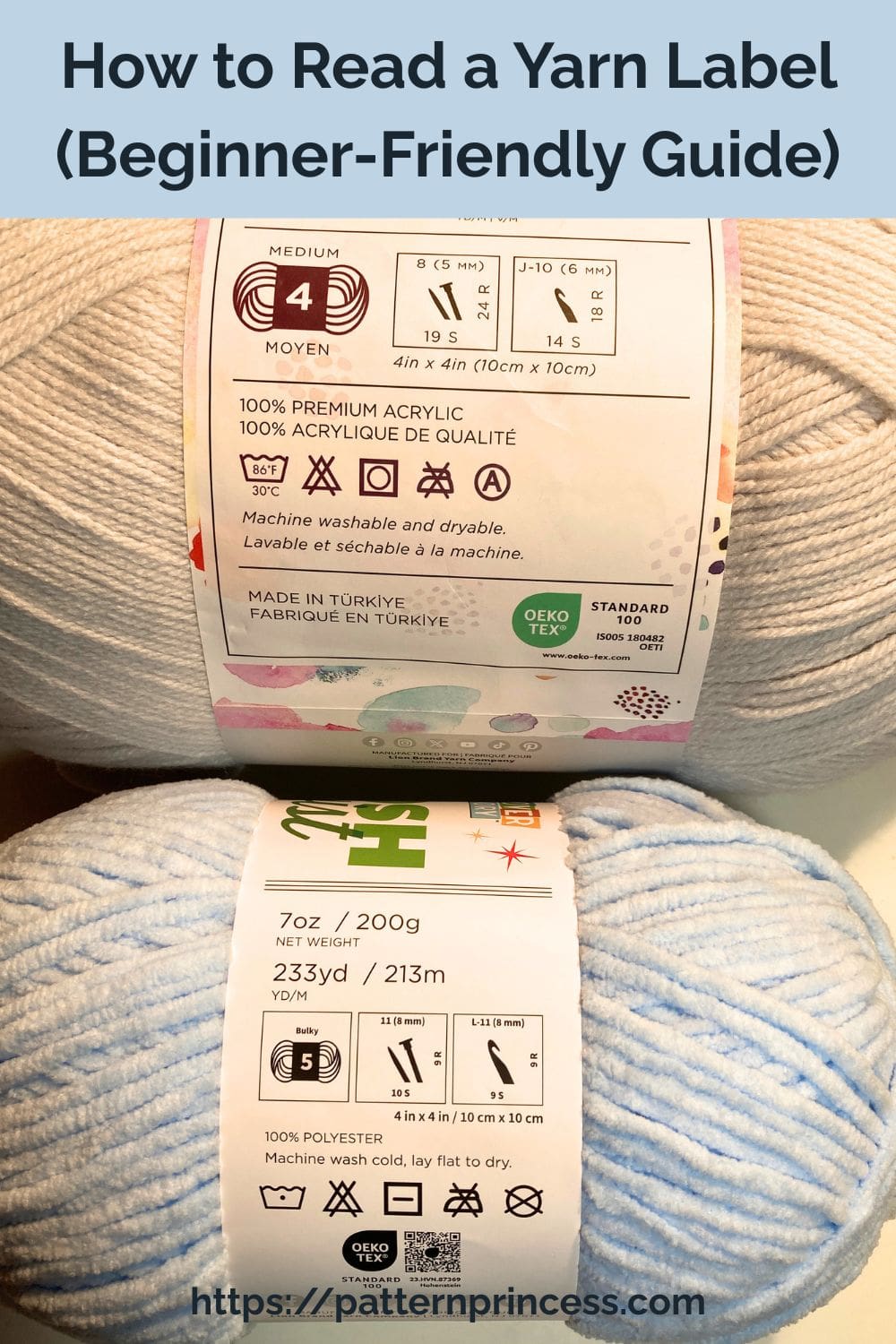
Why Yarn Labels Matter
Every skein of yarn (or ball of yarn) comes with a yarn ball band full of helpful details. This small piece of information tells you about the fiber content, yarn weight category, recommended hook or needle size, and even the care instructions.
Taking the time to read the label is the best way to ensure your knitting project or crochet piece turns out just right—especially if you’re working on a large project.
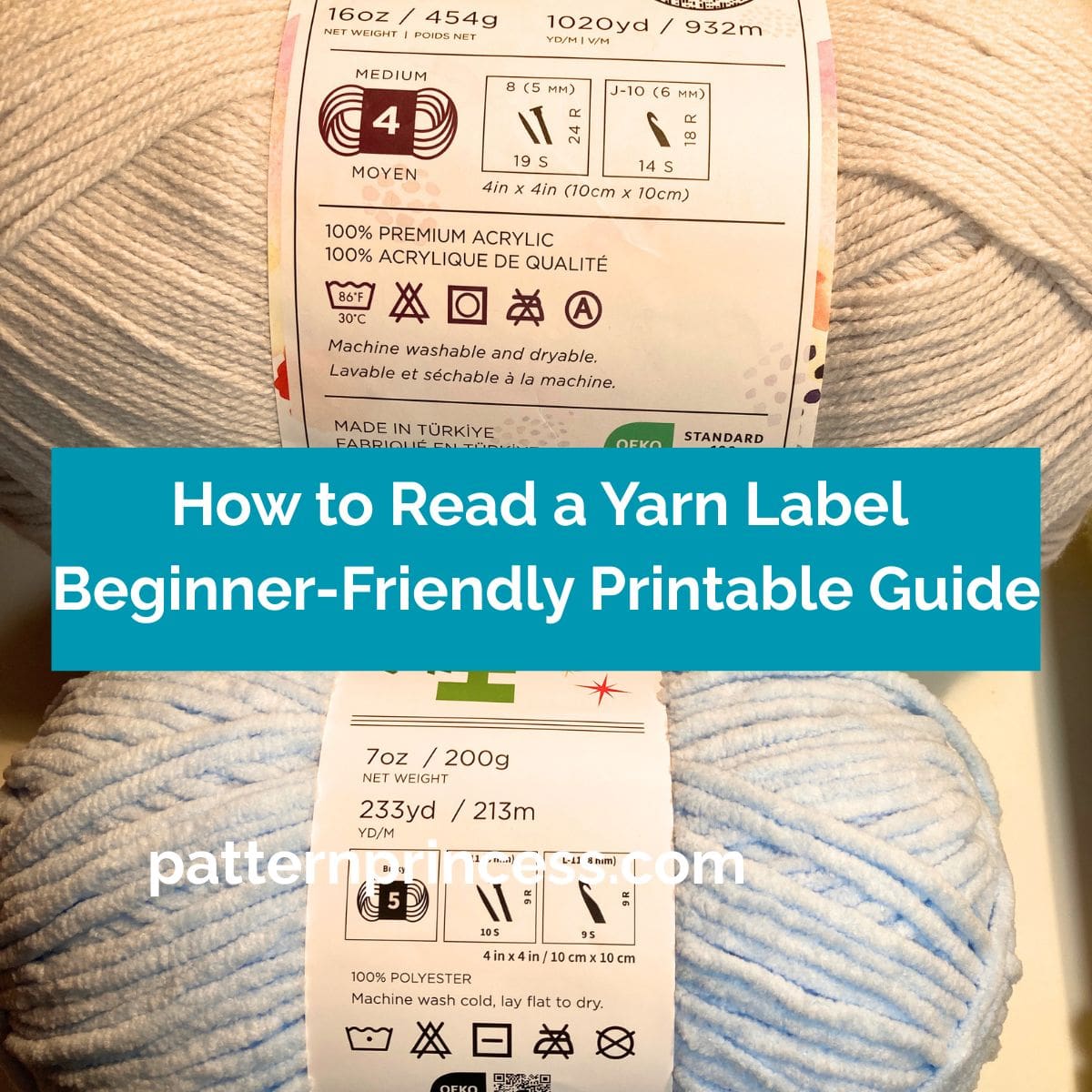
Beginner-Friendly Printable Guide
Want a simple version you can print and keep by your side? We’ve created a free printable guide to reading yarn labels with confidence. You’ll find it at the bottom of this post—just sign up for the newsletter to get your copy.
The Label Holds all the Answers
That tiny tag on your yarn isn’t just decoration 🏷️
It’s packed with 11 critical details that determine if your project succeeds or becomes an expensive mistake.
Here’s what you need to check before you buy:
✂️ Yarn weight category – Not the ball weight, but thickness (0-7 scale). Wrong weight = wrong finished size.
🧶 Fiber content – Wool stretches and forgives. Cotton doesn’t. Acrylic washes easy. This affects everything.
📏 Yardage + grams – A 100g ball of lace has 800 yards. Bulky? Maybe 90. Always buy by total yardage, not ball count.
📐 Gauge – That little square with numbers tells you stitches per 4 inches. Skip your gauge swatch, regret your sweater size.
🎨 Dye lot number – Different batches = different shades. Buy all at once or risk visible color lines in big projects.
🧼 Care symbols – Hand wash only? Machine safe? This determines if your finished piece survives real life.
The 60 seconds you spend reading saves hours of rework and wasted money.
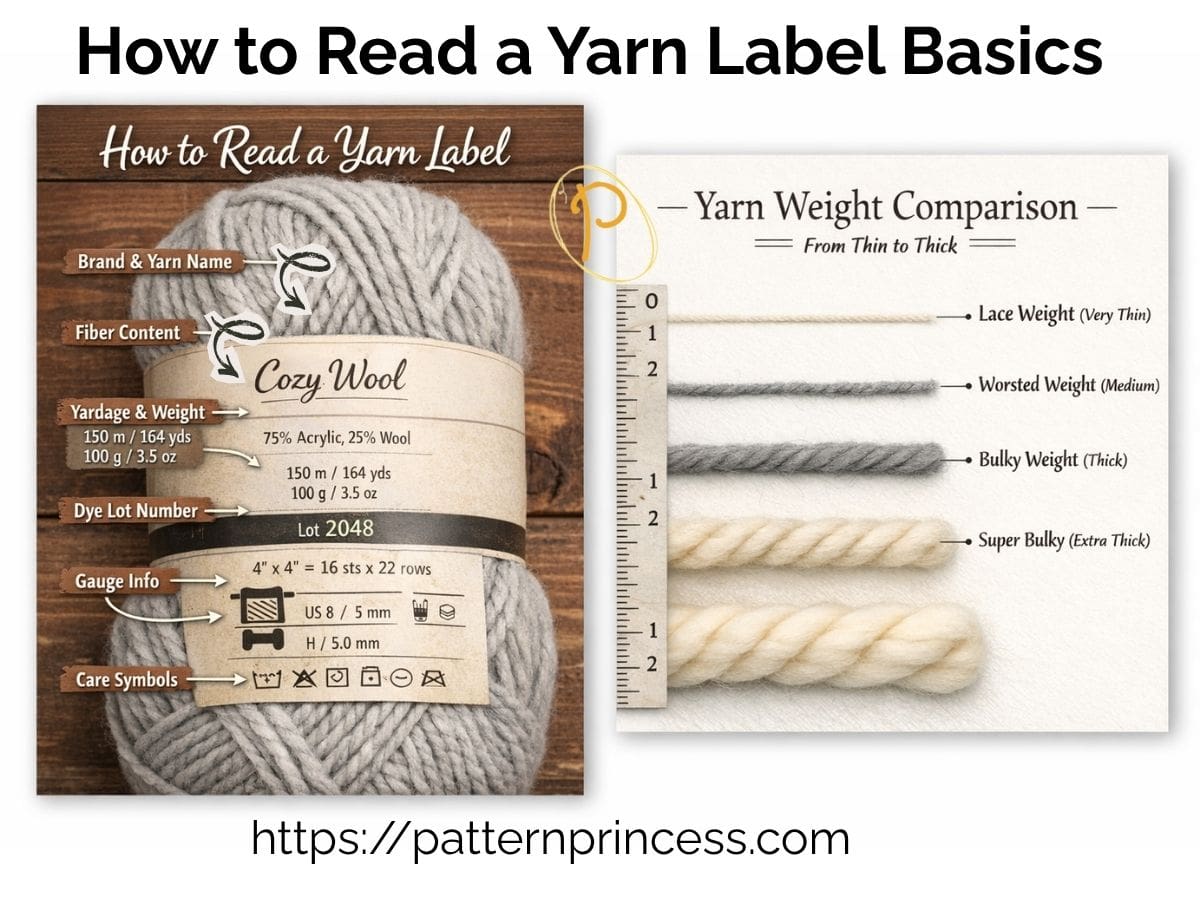
The Parts of a Yarn Label
Let’s break down the most important things you’ll find on different yarn labels.
1. Yarn Name & Brand Name
The yarn name and brand name are usually front and center.
This helps you:
- Identify the particular yarn
- Match it later if you need more
- Compare across yarn brands like Lion Brand, Yarnspirations, Red Heart, or Hobby Lobby yarn labels
If you fall in love with a yarn, this is the information you’ll want to remember for your next project.
2. Fiber Content (What the Yarn is Made Of)
The fiber content tells you what the yarn is made from—like:
- Wool yarn
- Cotton
- Acrylic
- Blends of different fibers
Different yarn fibers affect:
- Texture
- Warmth
- Durability
- Care instructions
For example, wool yarn is warm but may require gentle washing, while acrylic is often easier to care for.
Decoding Fiber Content Information
What your yarn is made from changes everything about how it behaves.
The fiber content section lists exactly what materials make up your yarn and in what percentages. You’ll see entries like “100% Merino Wool” or “80% Acrylic, 20% Wool” or “50% Cotton, 50% Bamboo.” This isn’t just trivia. Different fibers have completely different properties that affect drape, warmth, stretch, breathability, and how the yarn holds up over time.
Common fiber types and what they bring to your project:
Wool yarn is warm, elastic, and naturally water-resistant. It holds its shape beautifully and is forgiving for beginners because it stretches slightly as you work. Merino is soft against skin, while other wool varieties might feel scratchier.
Cotton is cool, breathable, and perfect for summer garments and dishcloths. It has zero stretch though, so it can be harder to work with and tends to grow and sag over time in large projects.
Acrylic is budget-friendly, machine washable, and comes in every color imaginable. It doesn’t breathe as well as natural fibers and can feel squeaky to work with, but modern acrylics have come a long way in softness.
Alpaca and cashmere offer luxury softness and incredible warmth without much weight. They’re pricier options that make special occasion garments feel extra special.
Blends combine the best properties of different fibers. An acrylic and wool blend might give you the washability of acrylic with the warmth and texture of wool.
Knowing your fiber content helps you choose the right yarn for where and how you’ll use the finished item. A wool scarf makes sense. A wool dishcloth doesn’t.
3. Yarn Weight Category & Thickness
The yarn weight category refers to the thickness of the yarn—not the physical weight.
The thickness directly impacts what projects work best and what needle size you need.
You’ll see categories like:
- Thinnest yarns (lace or light weight)
- Medium weight (like worsted weight yarn)
- Bulky yarn (thicker yarns for quick projects)
The thickness of the yarn impacts:
- How your stitches look
- How fast your project works up
- The overall size of your finished product
This is one of the most important things to match when following a pattern.
Standardized System of Yarn Weights
This isn’t about physical weight or how much the ball weighs. It’s about the diameter of the strand itself. The Craft Yarn Council created a standardized system with numbers 0 through 7, and you’ll find this displayed prominently on most yarn labels from major yarn brands.
Here’s what each category means:
- 0 (Lace). The thinnest yarns, perfect for delicate shawls and intricate lacework
- 1 (Super Fine). Also called fingering or sock yarn, great for lightweight garments and baby items
- 2 (Fine). Sport weight yarn that works beautifully for spring sweaters and baby blankets
- 3 (Light). Double knitting or DK weight, one of the most versatile options
- 4 (Medium). Worsted weight yarn, the most common choice for afghans and accessories
- 5 (Bulky). Chunky yarn that knits up quickly for cozy winter projects
- 6 (Super Bulky). Thicker yarn for ultra-fast projects and statement pieces
- 7 (Jumbo). The thickest available, often used for arm knitting and oversized blankets
Why does this matter so much?
If your pattern calls for worsted weight yarn and you substitute bulky yarn without adjusting everything else, your finished project will come out completely different in size. A baby sweater could end up fitting a toddler. The yarn weight category is your first checkpoint when matching yarn to any pattern.
Yarn Weight Chart
| Yarn Weight Category | Number | Common Name | Best Uses |
| Lace | 0 | Lace | Shawls, delicate projects |
| Super Fine | 1 | Fingering | Socks, baby items |
| Fine | 2 | Sport | Lightweight garments |
| Light | 3 | DK | Sweaters, baby blankets |
| Medium | 4 | Worsted | Afghans, hats |
| Bulky | 5 | Chunky | Scarves, fast projects |
| Super Bulky | 6 | Super Bulky | Blankets |
| Jumbo | 7 | Jumbo | Arm knitting |
4. Ball Weight & Yardage
This section tells you how much yarn you’re getting.
Look for:
- Ball weight (often listed in g balls or ounces)
- Yardage (total length of yarn)
This helps you determine:
- The amount of yarn needed for a larger project
- Whether you have enough yarn from a single skein of yarn
A good idea is to always buy a little more than you think you need—especially for a large project.
Making Sense of Yardage and Ball Weight
This is where beginners run into the most expensive problems.
Every yarn label shows how much yarn is in that particular skein or ball. You’ll see two numbers: the physical weight in grams (usually marked as 50g, 100g, etc.) and the length in yards or meters. These two numbers work together to tell you yarn density. A 100g ball of lace weight might have 800 yards, while a 100g ball of bulky yarn might only have 90 yards.
Why both numbers matter
You can’t just buy based on how many balls you need. Different yarn brands package their yarn in different amounts. One brand’s worsted weight yarn might come in 100g/220 yard skeins, while another brand sells 50g/110 yard balls. If your pattern says “5 balls of yarn,” you need to know the yardage to match it properly.
Most patterns tell you the total yardage required. Add 10% to that number as a safety buffer. Then divide by the yardage per ball to figure out how many you need. For a larger project like an afghan, this math becomes critical. Running out of yarn when you’re three-quarters done is devastating, especially if you can’t find the same dye lot.
The amount of yarn you need scales up dramatically with project size. A simple hat might take 150 yards. A full sweater could require 1,200 yards or more.
5. Dye Lot Number (Very Important!)
The dye lot number tells you which batch of yarn the skein came from.
Even if the yarn color looks the same, different batches can be a little different. For a consistent finished product:
- Always buy yarn from the same dye lot number
- Especially important for a large project
Dye Lot Numbers and Color Matching
That string of numbers labeled “dye lot” or “batch” seems insignificant until you need more yarn.
Yarn is dyed in large batches, and even with computerized color matching, slight variations happen between different batches of yarn. The same yarn color from different dye lots can look noticeably different when placed side by side. In a large project with lots of yardage, using different dye lot numbers creates visible stripes or patches that ruin the professional look of your work.
Best way to handle dye lots:
Buy all the yarn you need for a project at once, from the same dye lot. Check every ball band before you leave the store. If you’re buying online, contact the seller and ask them to match dye lots for your order.
If you absolutely must use different dye lots, alternate balls every two rows in your project. This technique blends the color variations so they’re less obvious than a hard line where one dye lot ends and another begins.
For smaller projects like hats or scarves, dye lot matters less. For a blanket or sweater where you need 10 or more balls of the same yarn color, it’s critical. Save one ball band from your project with the dye lot number written down. If you do run short, you can try to track down the same batch, though that becomes harder as time passes.

6. Gauge Information & Gauge Swatch
Gauge information shows how many stitches and rows you should have over a certain measurement.
This usually includes:
- A small diagram
- Suggested stitches (like single crochet or knitting stitches)
Making a gauge swatch is the best way to:
- Match the pattern’s sizing
- Ensure your project turns out the right size
This is especially important when working with garments or anything that needs to fit.
Gauge Information and Why It’s Non-Negotiable
Every yarn label includes a small square with numbers inside.
This is the gauge information, and it tells you how many stitches and rows you should get per 4 inches when working at the recommended needle size. You might see something like “18 sts x 24 rows = 4 inches on size 8 needles” for knitting or “16 single crochet x 20 rows = 4 inches with size H hook” for crochet.
Here’s the truth most beginners don’t want to hear: gauge is everything. Your personal tension might be tighter or looser than the yarn manufacturer expects.
Even if you use the exact recommended needle size, your gauge might not match. This is why you must make a gauge swatch before starting any project where size matters.
How to use gauge information:
- Look at the gauge on your yarn label
- Check the gauge your pattern requires
- If they match, start with the recommended needle size and make a test swatch
- If your pattern gauge is different, adjust your needle size accordingly
- Measure your swatch and adjust needle size up or down until your gauge matches perfectly
Skip this step on a sweater and you might end up with something that fits your cat instead of you. The gauge swatch takes 20 minutes. Ripping out and reknitting an entire sweater takes 20 hours.
Gauge Conversion Mini Table
| 4″ Gauge | Meaning |
| 16 stitches | Looser fabric |
| 20 stitches | Standard |
| 24+ stitches | Tighter fabric |
7. Recommended Hook & Needle Size
You’ll find:
- Recommended hook (for crochet)
- Recommended knitting needle size
These suggestions are based on the yarn’s thickness and help you get the correct gauge.
However, everyone’s tension is a little different, so think of this as a starting point—not a strict rule.
8. Care Instructions & Symbols
The back of your yarn label often includes care instructions using little symbols.
These various symbols tell you:
- Washing method
- Drying instructions
- Whether it can be ironed
This is especially important depending on the fiber content. For example:
- Wool yarn may need hand washing
- Acrylic may be machine washable
Care Instructions and Those Little Symbols
The back of the label shows a row of symbols that look like hieroglyphics.
These care instructions tell you exactly how to wash, dry, iron, and maintain your finished product so it lasts. Ignore these and you’ll end up with a felted sweater that’s three sizes too small or a dishcloth that falls apart after two washes. The symbols follow international standards, so once you learn them, you can read any yarn label from any brand in any country.
Quick symbol guide:
- A basin with water and a hand means hand wash only
- A basin with a number shows the maximum wash temperature
- A triangle relates to bleaching (empty means okay, X through it means never bleach)
- A square with a circle inside covers dryer settings
- An iron symbol shows if you can press the fabric and at what heat
- A circle indicates dry cleaning codes for professional care
Natural fibers like wool and alpaca usually require gentle hand washing and laying flat to dry. Plant fibers like cotton can often handle machine washing and drying. Acrylics are typically the most low-maintenance and machine-friendly.
When you’re choosing yarn for a particular project, factor in how much care you’re willing to give the finished item. A baby blanket that gets daily use needs to be machine washable. An heirloom shawl worn twice a year can handle more delicate care requirements.
The care instructions directly connect to the fiber content. If you see wool in the content list but spot a machine wash symbol, that yarn has been specially treated for easier care. These are important things to notice before you buy.
A Quick Example
Let’s say you pick up a skein labeled:
- Medium weight (worsted weight yarn)
- 100g ball weight
- 200 yards
- Recommended hook: 5.5 mm
- Same dye lot number
From this quick example, you now know:
- It’s a versatile yarn for many projects
- You’ll need multiple skeins for a large project
- You should use a medium hook size
- You’ll want matching dye lots for consistency
Choosing the Perfect Yarn for Your Project
When selecting the best yarn, keep these important things in mind:
- Match the yarn weight category from your pattern
- Check the fiber content for comfort and care
- Make sure you have enough yarn (always grab extra!)
- Confirm dye lot numbers match
- Follow gauge information for best results
Taking a few extra minutes to read the label is the best way to ensure success—especially if it’s your first time working with a new type of yarn.
Final Thoughts
Learning how to read a yarn label might feel overwhelming at first, but once you understand the parts of a yarn label, it becomes second nature.
Each piece of information—from fiber content to recommended needle size—helps guide you toward choosing the right yarn for your next project.
Whether you’re working with bulky yarn for a cozy blanket or experimenting with light weight yarn for something delicate, the label is your roadmap to a beautiful finished product.
Reading yarn labels transforms you from someone who guesses at the yarn store into someone who shops with complete confidence. Every detail on that small piece of paper serves a purpose, from helping you buy enough yarn the first time to making sure your finished sweater survives its first wash.
The next time you pick up a ball of yarn, flip it over and spend 30 seconds scanning the label. You’ll know instantly if it’s the right yarn for your project, how much you need, and how to care for it when you’re done.
How to Read a Yarn Label A Beginner-Friendly Quick Guide
Click on the photo and sign up for the newsletter to download your copy.

You can find Victoria crocheting, quilting, and creating recipes. She has cooked in restaurants for over 20 years, including many larger parties. She learned to crochet when she was just 11 years old and has been crocheting ever since; over 50 years now. Over 40 years ago, she loved her first class in sewing and continues to hone her skills in quilting. Many have enjoyed the handmade gifts over the years. In her professional career, she has worked in management in a wide variety of businesses including higher education as a dean of a division. All the while attending college part-time to achieve her doctorate in higher education with an emphasis in e-learning.
Stay connected with Pattern Princess
Add Pattern Princess as a preferred source in Google Search to make it easier to find our crochet patterns, recipes, quilt patterns, and other creative projects when you're looking for something new to make.
