
Discover what crochet is and how to get started. A simple beginner’s guide covering tools, stitches, and tips for learning this relaxing craft.
Have you ever looked at a beautiful handmade blanket, a cozy scarf, or a colorful crocheted hat and wondered how it was made? Crochet is a fun and creative craft that allows you to turn simple yarn into beautiful, useful, and personalized projects.
Whether you want to make a blanket for your home, create handmade gifts for family and friends, or simply try a new hobby, crochet is a wonderful skill to learn. With just a crochet hook, some yarn, and a little practice, you can begin creating your own handmade pieces.
In this beginner’s guide, we’ll explore what crochet is, how it works, the supplies you’ll need, the basic stitches to learn, and the many things you can make. We’ll also share tips to help you get started with confidence.
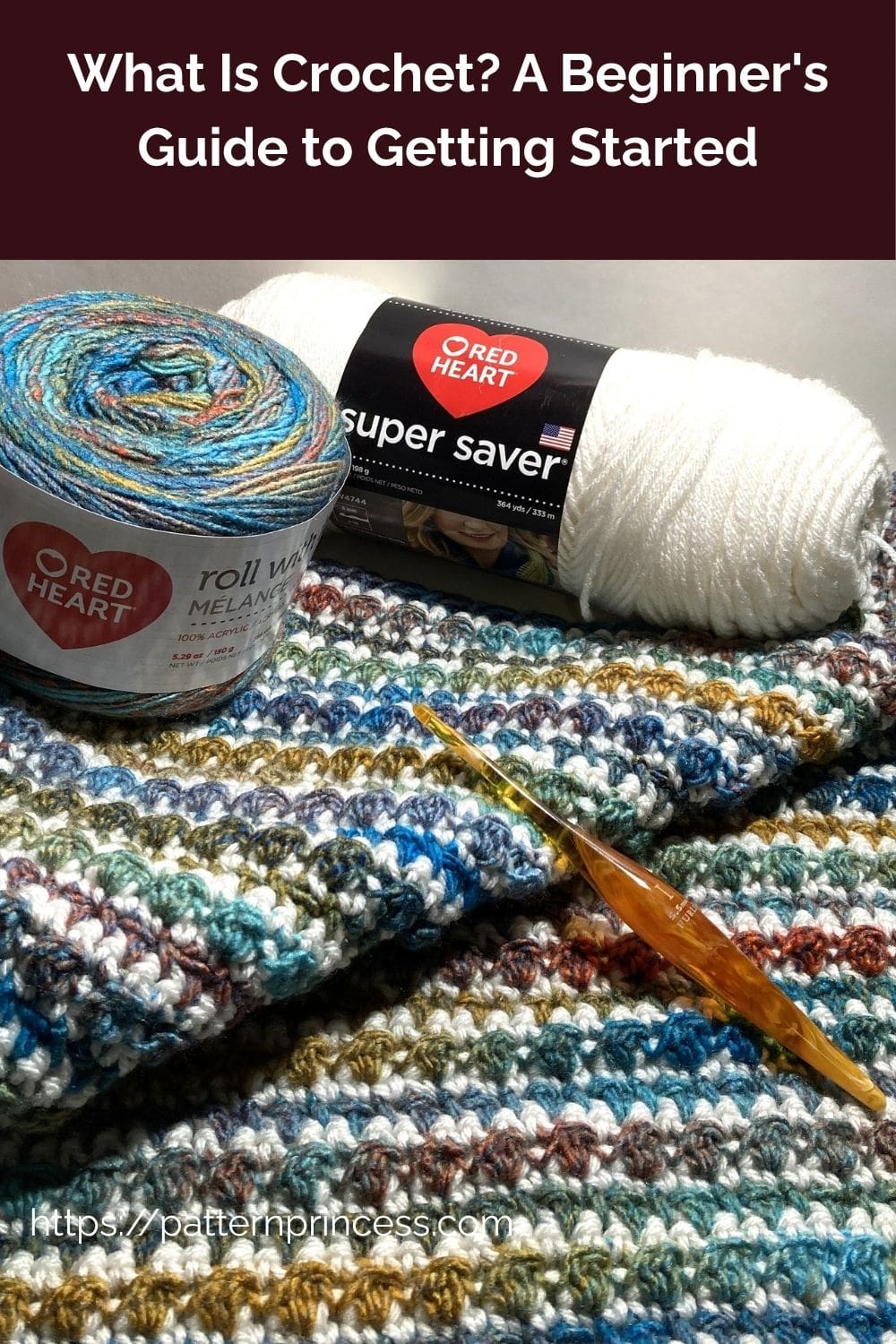
What Is Crochet?
Crochet is a craft that uses a hooked tool called a crochet hook to turn yarn or thread into fabric. The word crochet comes from a French word meaning hook, which describes the tool used to create each stitch.
When crocheting, you use the hook to pull loops of yarn through other loops, building a series of connected stitches. These stitches form a fabric that can be simple and smooth, thick and textured, open and lacy, or almost anything in between.
One of the wonderful things about crochet is its versatility. By changing the stitches, yarn, hook size, and colors you use, you can create an incredible variety of textures and designs.
Crochet can be used to make:
- Blankets and throws in a variety of sizes and stitch patterns.
- Scarves, hats, shawls, ponchos, and other accessories.
- Sweaters, cardigans, and other garments.
- Dishcloths, potholders, baskets, and home decor.
- Baby blankets, toys, and handmade gifts.
- Flowers, decorative motifs, and intricate lace designs.
Some crochet projects use just one or two basic stitches, while others combine more advanced techniques to create intricate patterns. This means there is always something new to learn, no matter how long you’ve been crocheting.
What Is the Difference Between Crochet and Knitting?
Crochet and knitting are both popular yarn crafts, and they can produce many of the same types of finished projects. However, they use different tools and techniques.
Crochet typically uses one hook to pull loops of yarn through other loops to create stitches. The stitches are worked with the hook, and the fabric is built as you progress through the pattern.
Knitting typically uses two needles to work with loops of yarn. The stitches are formed on the needles as the fabric grows.
Although both crafts can make blankets, scarves, hats, garments, and home accessories, their fabrics often have different characteristics. Crochet frequently creates a more textured or structured fabric, depending on the stitch used, while knitting often produces a fabric with a different drape and stretch.
Neither craft is better than the other. They simply offer different ways to work with yarn.
If you enjoy the idea of using a single hook to create a wide variety of stitches and textures, crochet is a wonderful place to start!
What Do You Need to Start Crocheting?
One of the best things about crochet is that you don’t need a large collection of supplies to begin. A few basic tools are enough to start practicing.
Yarn
Yarn is the material you’ll use to create your crochet project. It comes in many different weights, fibers, colors, and textures.
For beginners, a smooth, medium-weight yarn in a light or solid color is often a good choice. It makes it easier to see your stitches and understand where to insert your hook.
Yarn labels usually include information about the yarn weight, fiber content, recommended hook size, and care instructions. These details become especially helpful when you begin following crochet patterns.
Crochet Hook
A crochet hook has a hooked tip that catches the yarn and pulls it through loops to form stitches. Hooks come in different sizes and materials, including aluminum, plastic, bamboo, and ergonomic designs.
The hook size you need depends on the yarn and the project you’re making. Your yarn label will often suggest a starting hook size, while a crochet pattern will typically specify the recommended size.
Using the correct hook helps you achieve the intended stitch size and fabric texture.
Scissors
A small pair of scissors is useful for cutting yarn when you finish a project or need to change colors.
Yarn Needle
A yarn needle, also called a tapestry needle, has a large eye for threading yarn. You’ll use it to weave in loose ends when your project is complete.
Optional Crochet Supplies
As you gain experience, you may find a few additional tools helpful:
- Stitch markers: Help you mark particular stitches, rounds, or important places in a pattern.
- Measuring tape: Helps you check the dimensions of your work.
- Row counter: Helps you keep track of rows or pattern repeats.
- Project bag: Keeps your yarn and supplies together while you work.
You don’t need to buy everything at once. Start with the basics and add tools as you discover what works best for you.
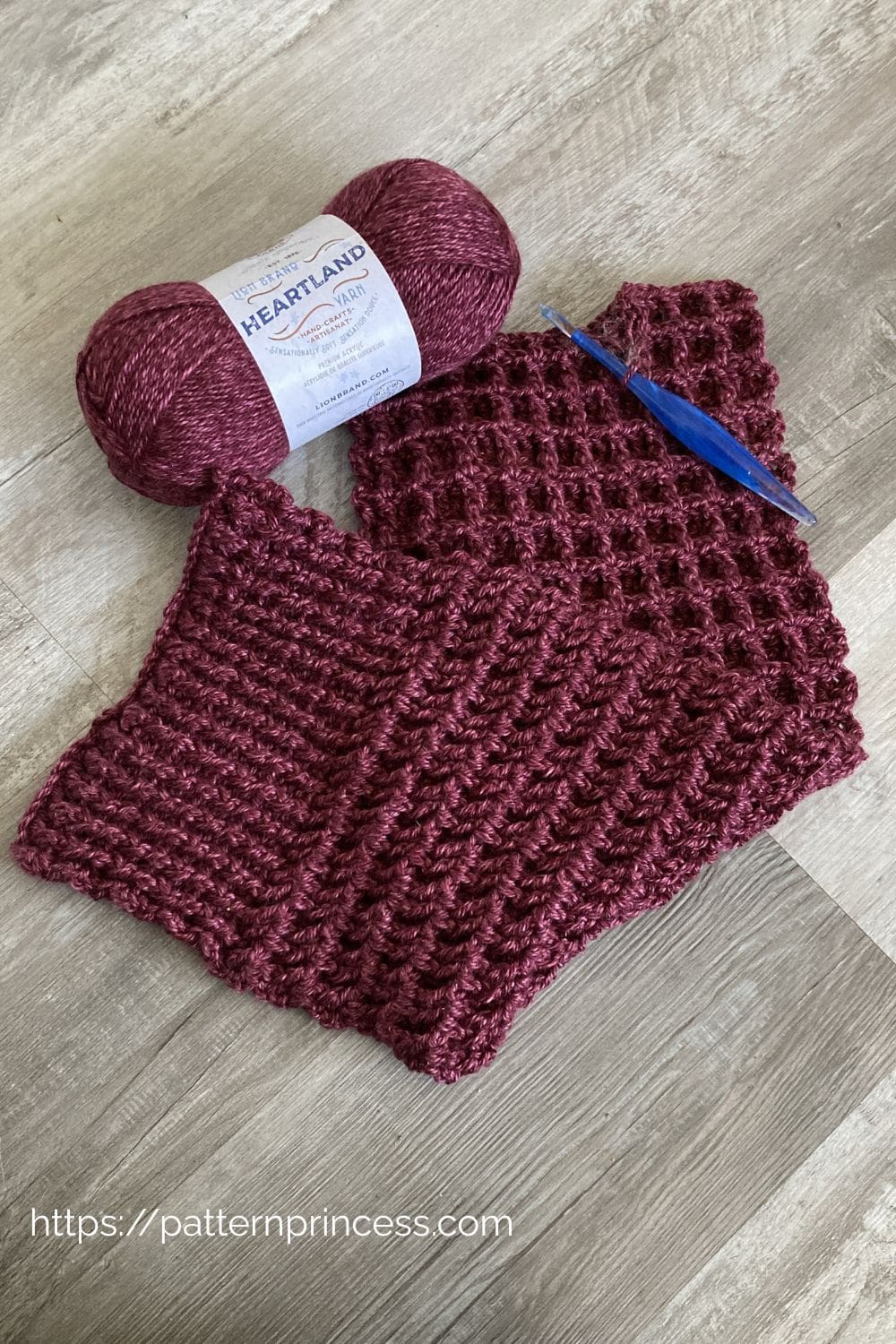
How Does Crochet Work?
Crochet is built by working loops of yarn together with a hook. Although the process may look complicated at first, the basic idea is straightforward once you understand how the stitches are formed.
Here is a general overview of how a crochet project comes together.
1. Make a Slip Knot
Many crochet projects begin with a slip knot on the hook. This creates the starting loop from which you’ll begin working.
2. Create a Foundation Chain When Needed
Many patterns begin with a series of chain stitches. These chains form the foundation for the first row of stitches.
Not every project starts with a foundation chain. Some patterns begin with a ring or use other starting techniques, depending on the design.
3. Work Your Stitches
Next, you’ll use your hook to form the stitches specified in the pattern. You may work into the foundation chain, the stitches from the previous row, or spaces within the fabric.
Each stitch is made using a particular sequence of movements. Once you learn the basic stitches, you’ll start recognizing how they fit together.
4. Continue Through Rows or Rounds
Some projects are worked back and forth in rows. Others are worked in continuous spirals or joined rounds, such as many hats, baskets, and amigurumi projects.
As you work, you’ll follow the instructions to repeat stitches, change colors, shape the fabric, or create a particular texture.
5. Finish Your Project
When you’ve completed the required rows or rounds, you’ll fasten off the yarn and weave in any loose ends. Some projects also require sewing pieces together, adding a border, or attaching finishing details.
With practice, these steps become familiar, and you’ll be able to focus more on enjoying the creative process.
What Are the Basic Crochet Stitches?
Learning a few basic crochet stitches gives you a foundation for making many different projects. You don’t have to learn every stitch before you begin. In fact, many beautiful patterns use just a handful of stitches repeated throughout the design.
Here are some of the most common crochet stitches you’ll encounter.
Chain Stitch (CH)
The chain stitch is commonly used to begin crochet projects, create spaces between stitches, or add decorative details.
Chain stitches form a series of connected loops and are one of the first techniques most beginners learn. You’ll often use chains to create the foundation for a row of crochet stitches or to make spaces in lace and openwork patterns.
Slip Stitch (SL ST)
The slip stitch is a short stitch that adds very little height to your work. It is often used to join stitches, close rounds, move across a row without adding much height, or create decorative details.
Slip stitches can feel a little tricky at first because they are small and easy to work too tightly. Once you get comfortable with them, you’ll find them useful for finishing and joining crochet projects.
Single Crochet (SC)
Single crochet is one of the shortest basic crochet stitches and creates a relatively compact, sturdy fabric. It is often used for dishcloths, amigurumi, baskets, bags, and many other projects.
Because single crochet creates a dense fabric, it takes a little longer to work up than taller stitches. It is also a great stitch for learning how to recognize the top of a crochet stitch and where to insert your hook.
Half Double Crochet (HDC)
Half double crochet creates a stitch taller than single crochet but shorter than double crochet. It gives you a nice balance of coverage, texture, and flexibility.
This is a versatile stitch for blankets, scarves, hats, and other everyday projects. It also works up more quickly than single crochet while still providing good coverage.
Double Crochet (DC)
Double crochet is taller than single crochet and half double crochet, so projects made with this stitch generally grow more quickly.
Depending on the yarn and hook size, double crochet can create a softer fabric with more drape than single crochet. It is used in countless patterns, including blankets, scarves, shawls, garments, and decorative designs.
Treble Crochet (TR)
Treble crochet, called triple crochet in some patterns, creates one of the taller basic crochet stitches. Because of its height, it works up quickly and can create an open, airy fabric.
Treble crochet is often used for lacy designs, decorative patterns, and projects where you want more space between stitches. It can also be combined with shorter stitches to create interesting shapes and textures.
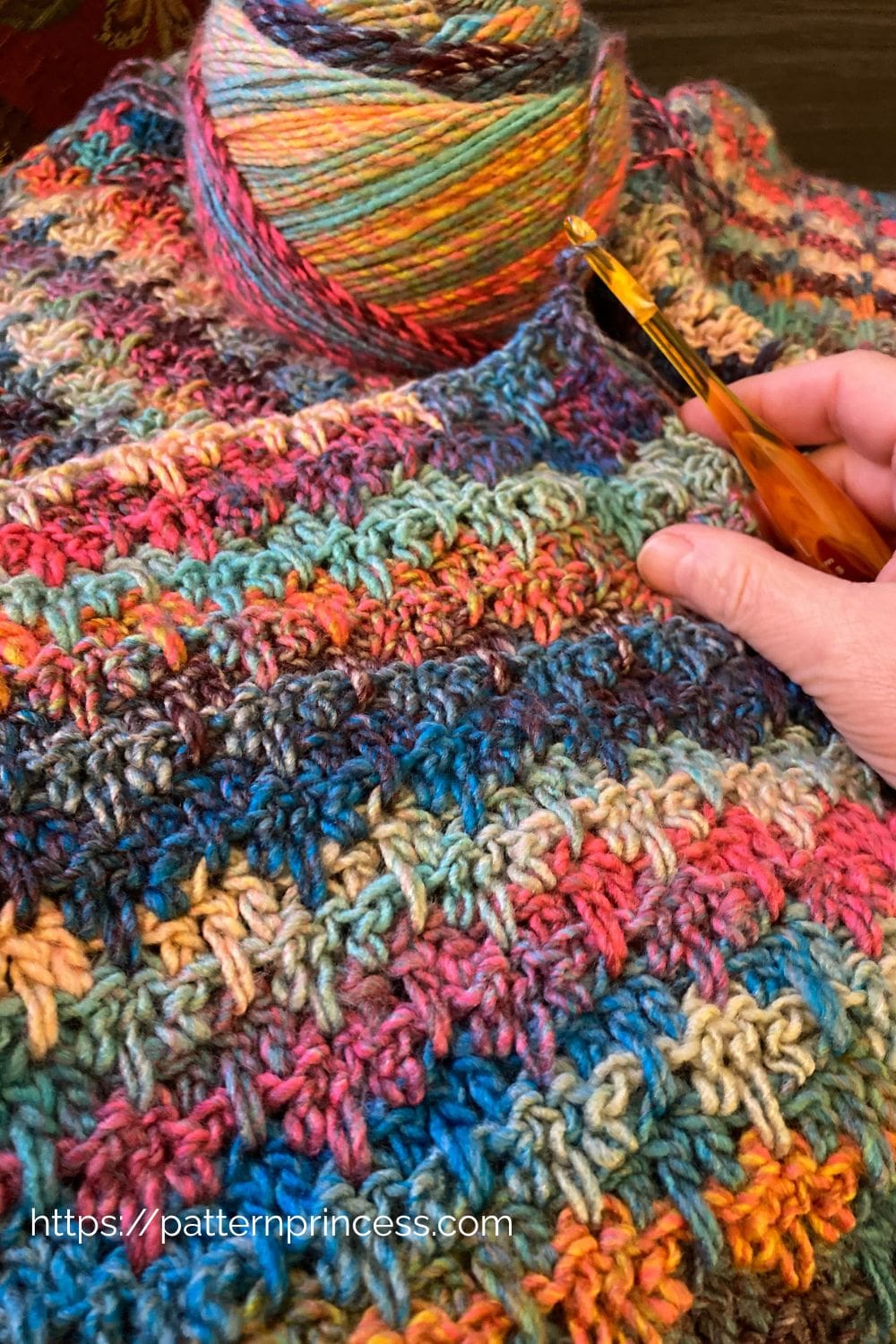
A Quick Look at Crochet Stitch Heights
As you learn the basic stitches, it helps to understand that they build upward at different heights. In general, the chain and slip stitch are very short, followed by single crochet, half double crochet, double crochet, and treble crochet.
The taller the stitch, the more quickly your project can grow in height. Taller stitches can also create more open and flexible fabric, while shorter stitches generally create a denser fabric.
The yarn, hook size, and your personal tension will also affect how the finished fabric looks and feels.
US and UK Crochet Terms
One thing that can be confusing when you’re first learning is that crochet patterns may use US or UK terminology. The same stitch can have a different name depending on which system the pattern uses.
For example, a US single crochet is called a double crochet in UK terminology. Always check which terminology a pattern uses before you begin, especially when following tutorials or patterns from different countries.
| US | UK |
| Single crochet (SC) | Double crochet (DC) |
| Half double crochet (HDC) | Half treble (HTR) |
| Double crochet (DC) | Treble crochet (TR) |
| Treble crochet (TR) | Double treble (DTR) |
What About Textured Crochet Stitches?
Once you’re comfortable with the basics, you can explore stitch combinations that create even more interesting designs.
Some stitches produce raised ridges, woven-looking textures, bobbles, puffs, or geometric patterns. Other combinations create delicate openwork or lacy designs.
Many textured crochet patterns are simply combinations of basic stitches worked in a particular order. This is one of the reasons crochet offers so many possibilities.
Tip for beginners: Practice one stitch at a time and pay attention to the shape of each stitch. Being able to recognize your stitches makes it easier to follow patterns and find mistakes.
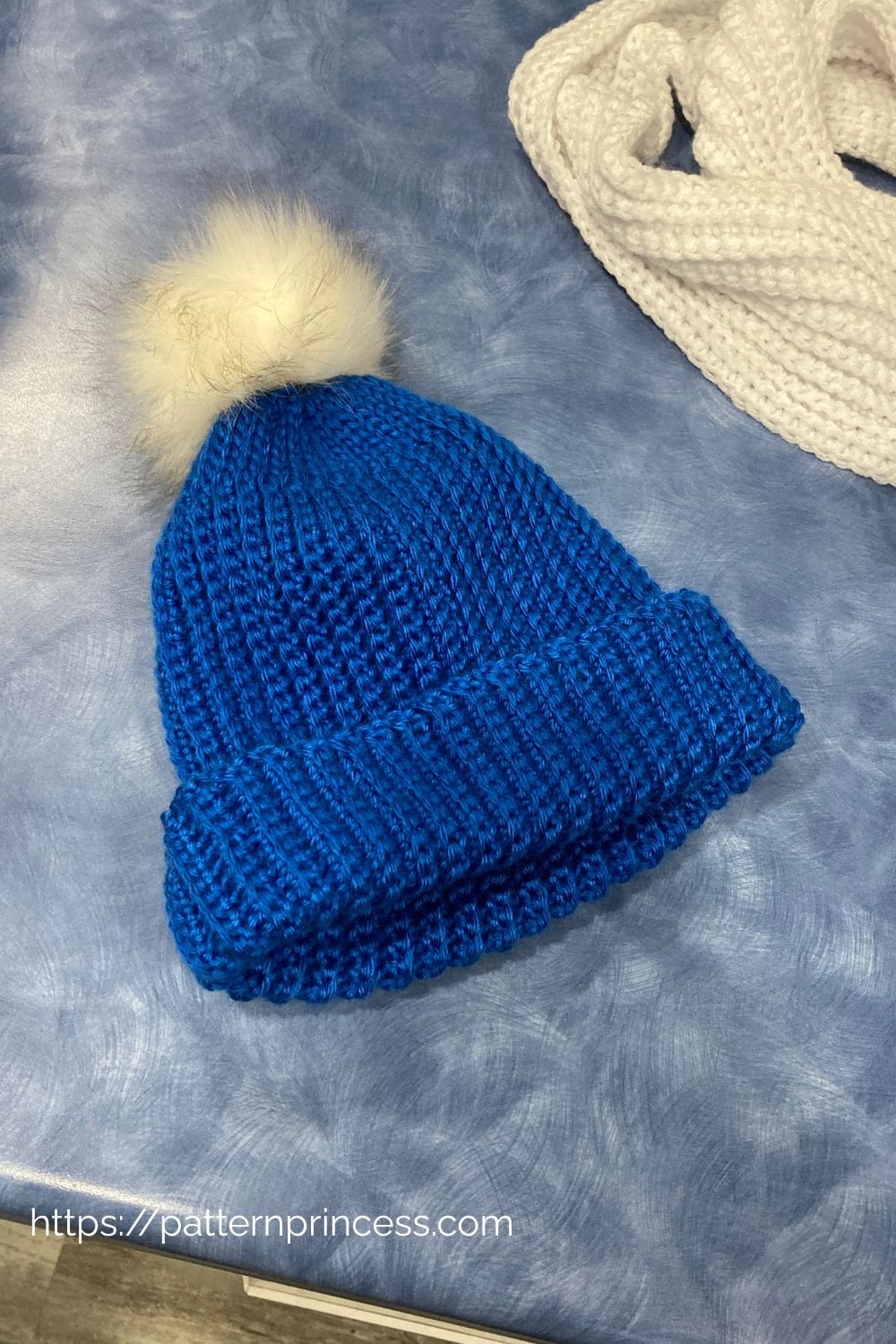
What Can You Make With Crochet?
One of the most exciting things about learning crochet is discovering just how many projects you can make. You can create something small and simple in an afternoon or work on a larger project over several weeks.
Here are some popular types of crochet projects to explore.
Crochet Blankets and Throws
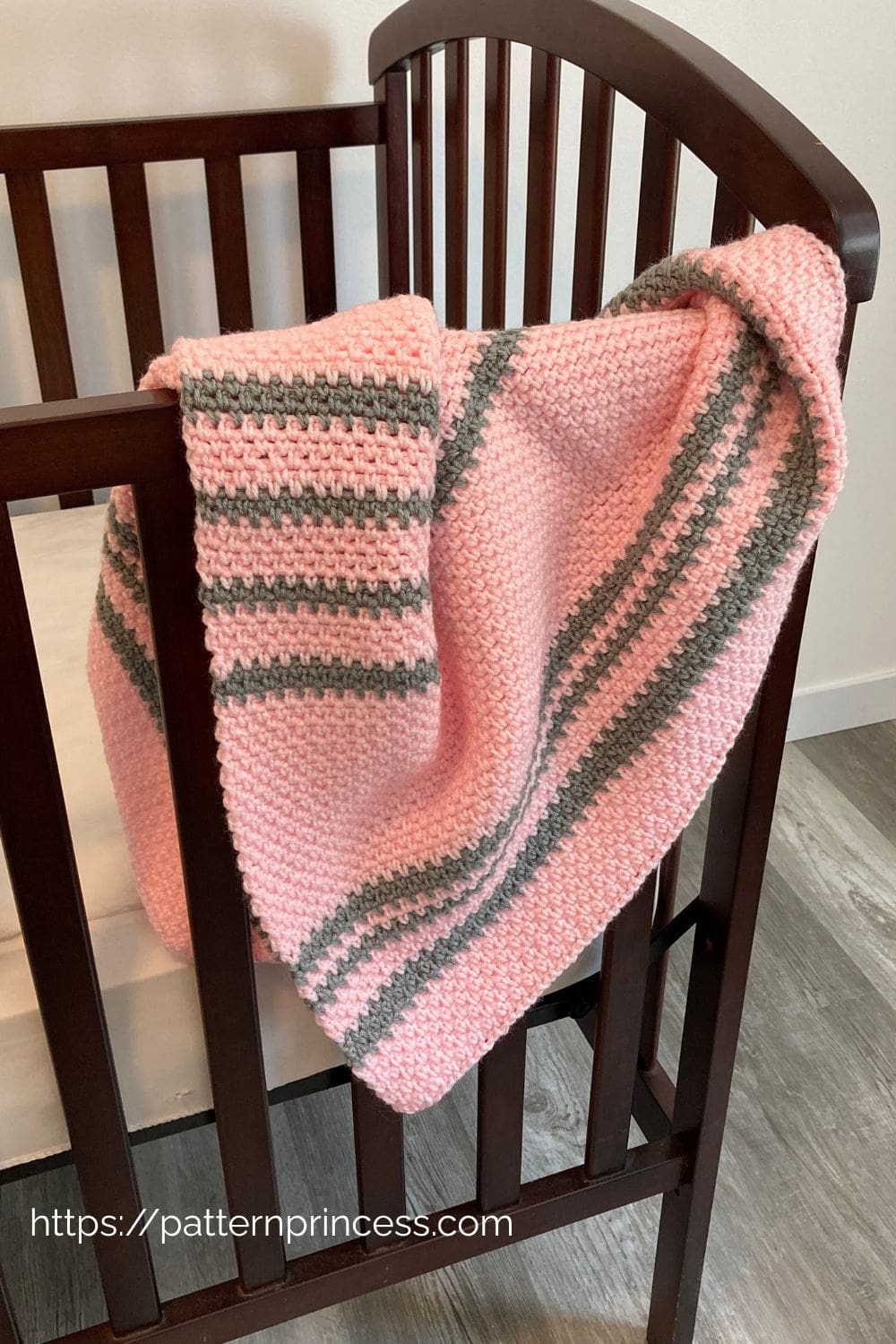
Blankets are wonderful projects because they allow you to experiment with colors, stitches, textures, and sizes. You can make a small baby blanket, a lap blanket, or a large throw for your living room.
Some blanket patterns use simple stitches repeated across every row, making them a good option for beginners. Others feature textured stitch combinations, color changes, decorative borders, or more intricate designs.
Scarves, Hats, and Wearable Accessories
Crochet is also ideal for accessories. Scarves, cowls, hats, wrist warmers, shawls, and ponchos are just a few of the things you can make.
Smaller accessories can be satisfying projects when you want to practice a new stitch without committing to a large blanket.
Home Decor
Crochet can add handmade charm throughout your home. You can create baskets, pillows, dishcloths, coasters, table decorations, and seasonal accessories.
Different yarns and stitches allow you to make items that are soft and flexible or firm and structured.
Handmade Gifts
Crocheted gifts can be personalized for the recipient. Choose their favorite colors, make something that suits their interests, or create a blanket or accessory for a special occasion.
Because you can adjust the colors, dimensions, and details, handmade crochet projects offer plenty of room for creativity.
Toys and Decorative Projects
Crochet is also used to make stuffed animals, dolls, flowers, ornaments, and small decorative pieces.
Amigurumi is the term commonly used for the craft of making small stuffed toys and figures, often using crochet.
No matter what interests you, there’s likely a crochet project that will inspire you to pick up a hook.
Best Crochet Projects for Beginners
If you want something quick:
- dishcloth
- coaster
- simple hat
Projects to practice rows:
- scarf
- simple blanket
- washcloth
If you want to learn working in the round:
- simple hat
- basket
- granny square
Learn color changes:
- striped scarf
- granny square
- simple blanket
Is Crochet Easy to Learn?
Crochet is an approachable craft for beginners, especially when you start with simple stitches and projects. However, like any new skill, it takes practice to become comfortable with the movements and develop consistent results.
At first, you may find it challenging to hold the yarn, control the tension, or identify exactly where to insert your hook. Your stitches may look uneven, and you may need to undo a few rows to correct a mistake.
That’s completely normal!
As you practice, you’ll become more familiar with the stitches and develop a rhythm that feels comfortable. You’ll also learn how to recognize the top of a stitch, count your stitches, and keep your rows even.
Here are a few tips to make learning easier:
- Start with a simple project. A basic dishcloth or small rectangle lets you practice without worrying about complicated shaping.
- Choose a yarn that’s easy to see. Smooth, light-colored yarn makes it easier to identify individual stitches.
- Practice one stitch at a time. Become comfortable with one technique before adding several new ones.
- Use photo and video tutorials. Seeing how a stitch is formed can make a big difference, especially when you’re learning a new movement.
- Be patient with yourself. Your first project doesn’t need to be perfect. Each one helps you build experience.
You don’t need to master every stitch before making something beautiful. Many beginner-friendly patterns are designed around simple repeats, allowing you to learn while creating a useful finished project.
How Do You Read a Crochet Pattern?
A crochet pattern provides instructions for making a particular project. It explains the materials you’ll need, the stitches to use, and the steps to follow to create the finished item.
Patterns can look a little intimidating at first because they often use abbreviations and specialized terms. Once you become familiar with the format, however, they become much easier to follow.
Most written crochet patterns include several common elements.
Materials
This section lists the yarn, crochet hook, and other supplies required for the project. It may also include yarn amounts, colors, and suggested alternatives.
Gauge
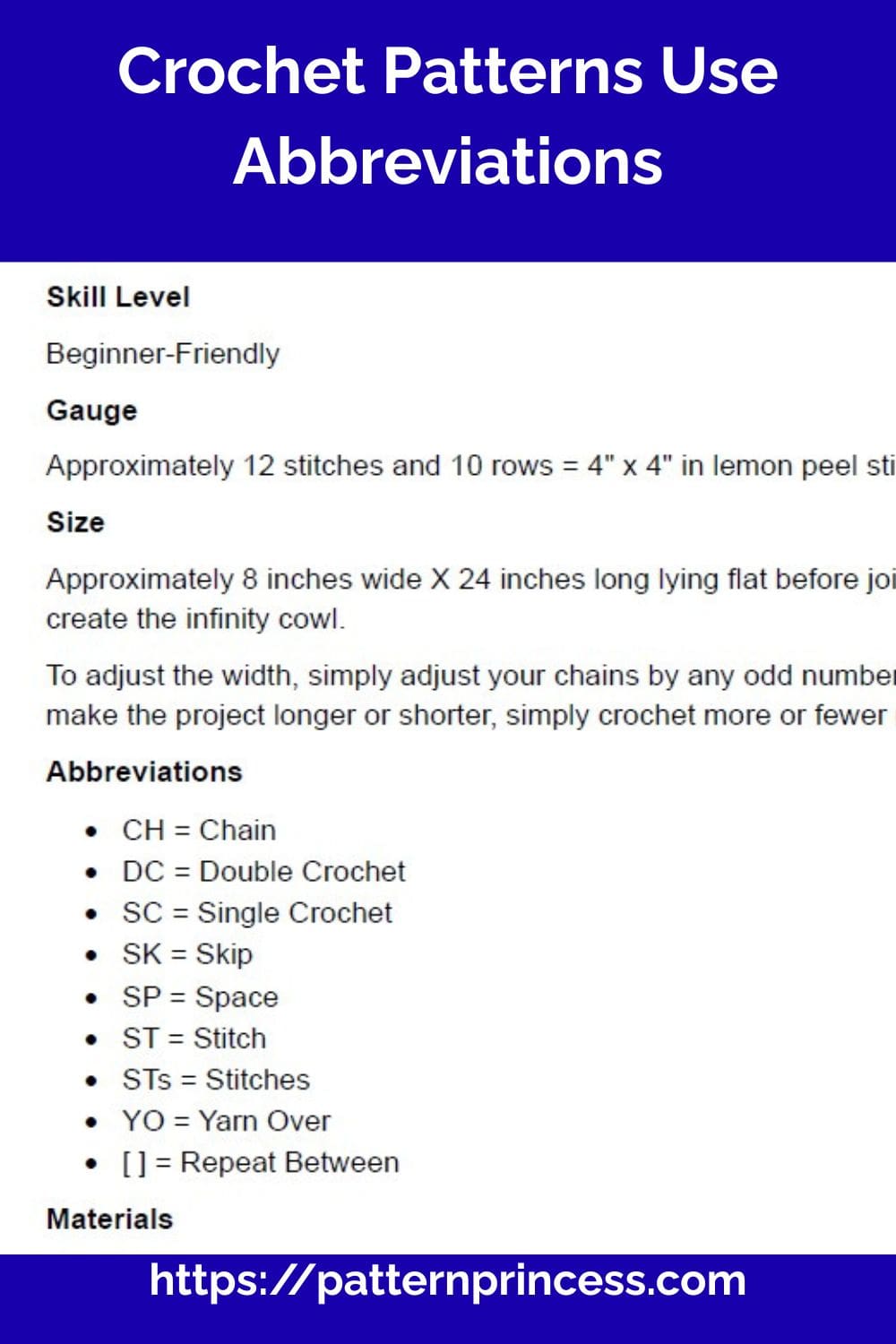
Gauge tells you how many stitches and rows fit into a specified area, often a 4-by-4-inch square.
This matters because differences in stitch size can affect the finished dimensions of a project. It is especially important for garments, fitted accessories, and blankets where a particular finished size is desired.
Common Crochet Abbreviations
Crochet patterns use abbreviations to keep the instructions shorter and easier to read. Most patterns include a list of the abbreviations used, but you’ll quickly become familiar with many of the most common ones.
Here are a few you’ll see frequently:
- CH – chain
- SC – single crochet
- HDC – half double crochet
- DC – double crochet
- TR – treble crochet
- SL ST – slip stitch
- ST – stitch
- STS – stitches
- SP – space
- SK – skip
- REP – repeat
- RND – round
- BEG – beginning
- INC – increase
- DEC – decrease
You may also see numbers and symbols used to show repeats. For example, an asterisk (*) may mark the beginning of a sequence that should be repeated, while parentheses may group instructions together.
Don’t worry about memorizing all of these at once. Keep the pattern’s abbreviation list nearby and refer to it as you work. After following a few patterns, many of these terms will become second nature.
Not sure what all those abbreviations mean? See my complete guide to Crochet Abbreviations for a handy reference.
Row and Round Instructions
The main pattern directions explain what to do, row by row or round by round. They may tell you how many stitches to work, where to place them, and which sections to repeat.
For example, an instruction might tell you to repeat a sequence of stitches across the row. Understanding how to recognize and count stitches will help you follow these directions more easily.
Finished Measurements and Sizing
Some patterns offer several sizes or provide instructions for adjusting the dimensions. Check the finished measurements before you begin so you have a clear idea of what you’re making.
Photo and Video Tutorials
Many patterns include photographs or video demonstrations to help you understand the instructions. These resources can be especially helpful when you’re learning a new stitch or working through an unfamiliar technique.
If you’re a visual learner, look for patterns with step-by-step photographs and video tutorials you can follow as you crochet.
We have a growing video tutorial library on our YouTube Channel.
Can Left-Handed People Crochet?
Absolutely! Left-handed people can learn to crochet just as right-handed people can.
Many crochet instructions are traditionally demonstrated for right-handed crocheters, but the basic techniques can be mirrored for left-handed crocheters. The hook and yarn are handled in the opposite hands, and the direction of the work is generally reversed.
If you’re left-handed, finding tutorials filmed specifically for left-handed crocheters can make learning much easier. You can watch the movements as they naturally correspond to your dominant hand rather than trying to mirror every step yourself.
When choosing a tutorial or pattern resource, look for clear demonstrations and instructions that match the way you prefer to work.
Why Do People Love Crochet?
Crochet is more than a way to make blankets, accessories, and home decor. For many people, it’s an opportunity to express creativity and enjoy the satisfaction of making something by hand.
Here are a few reasons people are drawn to crochet.
Creative freedom. You can experiment with colors, textures, stitch patterns, and designs to create something that reflects your personal style.
Relaxation and stress relief. The repetitive motion of crocheting can be calming, especially when you’re working on a familiar stitch pattern. Sitting down with your yarn and hook gives you a chance to slow down, focus on the project in front of you, and take a break from the busyness of the day.
Useful handmade projects. Crochet lets you make items for everyday life, from cozy blankets and warm scarves to practical baskets and dishcloths.
Personalized gifts. Handmade projects can be customized for friends and family, making them thoughtful gifts for birthdays, holidays, and other special occasions.
A skill that keeps growing. There are always new stitches, techniques, and patterns to explore. As your skills develop, you can take on more challenging projects and discover new ways to use yarn.
The satisfaction of making something yourself. Watching a project take shape stitch by stitch can be rewarding, whether you’re making your very first square or finishing a blanket you’ve worked on for weeks.
Best of all, crochet can grow with you. You can keep things simple or challenge yourself with more detailed patterns as you gain confidence.
How to Get Started With Crochet
If you’re ready to try crochet, the best way to begin is to keep things simple.
You don’t need an extensive collection of supplies or years of experience. Start with a crochet hook, a skein of beginner-friendly yarn, and a willingness to practice.
Here is a simple path to follow.
Step 1: Gather your supplies. Choose a smooth yarn and a compatible crochet hook. Check the yarn label or your chosen pattern for a suggested hook size.
Step 2: Learn how to hold your hook and yarn. There is more than one comfortable way to hold them. Try a few approaches and find what feels natural for you.
Step 3: Practice the chain stitch. Make a series of chains to become familiar with holding the yarn and pulling it through a loop.
Step 4: Learn single crochet. Practice working into your chain and forming a row of stitches. Focus on recognizing each stitch and keeping your tension reasonably consistent.
Step 5: Choose a beginner-friendly project. A simple dishcloth, washcloth, or small blanket is a good way to put your new skills to use.
Step 6: Follow a tutorial as you work. Written instructions, step-by-step photos, and videos can help you understand each part of the process.
How Do You Read a Crochet Pattern?
A crochet pattern gives you the instructions you need to make a particular project. It tells you what materials to use, which stitches and techniques are needed, and how to work each row or round.
Patterns can look intimidating when you’re new to crochet because they use abbreviations, numbers, symbols, and repeated instructions. Once you understand how a pattern is organized, they become much easier to follow.
What to Look for in a Well Written Pattern.
Before you begin a new pattern, take a few minutes to read through it.
Start with the materials. Check the recommended yarn weight, yarn amount, crochet hook size, and any additional supplies you’ll need.
Look at the finished measurements. If the pattern provides measurements or multiple sizes, make sure you know which size you are making before you begin.
Check the gauge. If the pattern includes a gauge, take the time to check it, especially for blankets, garments, hats, and other projects where the finished size matters.
Read the abbreviations. Make sure you understand the stitch abbreviations and other terms used in the pattern before you start.
Look for stitch repeats. Many crochet patterns are built around a repeating sequence. Finding that repeat can make a pattern much easier to understand.
Pay attention to parentheses and asterisks. These are often used to show which instructions should be repeated. The pattern should explain how these symbols are being used.
Keep track of your rows or rounds. A stitch marker, row counter, pencil, or even a simple note can help you remember where you are.
You don’t need to understand the entire pattern perfectly before making your first stitch. Read through it once, gather your supplies, and then work through the instructions one step at a time.
If the pattern includes photos or a video tutorial, use them. Seeing what the finished stitch or section should look like can make written instructions much easier to understand.
How Do I Know Where to Put My Hook?
One of the trickiest things for a new crocheter is figuring out exactly where the hook should go. Once you know what you’re looking for, it becomes much easier.
When you look at the top of most crochet stitches, you’ll see a little V shape. That V is made up of two loops: the front loop and the back loop.
Unless a pattern tells you otherwise, you will usually insert your hook under both loops of the V.
Variations
Patterns may sometimes tell you to work into only one loop. For example:
- Front loop only (FLO) means you insert your hook under the front loop.
- Back loop only (BLO) means you insert your hook under the back loop.
Working into different loops changes the appearance and texture of your crochet. You may see ridges or lines running across the fabric when you work in the back loop only.
You may also be instructed to work into a space rather than directly into the top of a stitch. This is common in granny squares, lace patterns, and other designs with open spaces.
When you’re learning, take a moment to look at your stitches before inserting your hook. Find the little V at the top, count your stitches when needed, and follow the pattern’s instructions about where to place the hook.
It may feel confusing at first, but recognizing your stitches is one of the skills that makes crochet much easier as you gain experience.
Remember, you don’t have to learn everything at once. Start with the basics, enjoy the process, and build on what you learn with each project.
Why Don’t My Stitches Look Like the Picture?
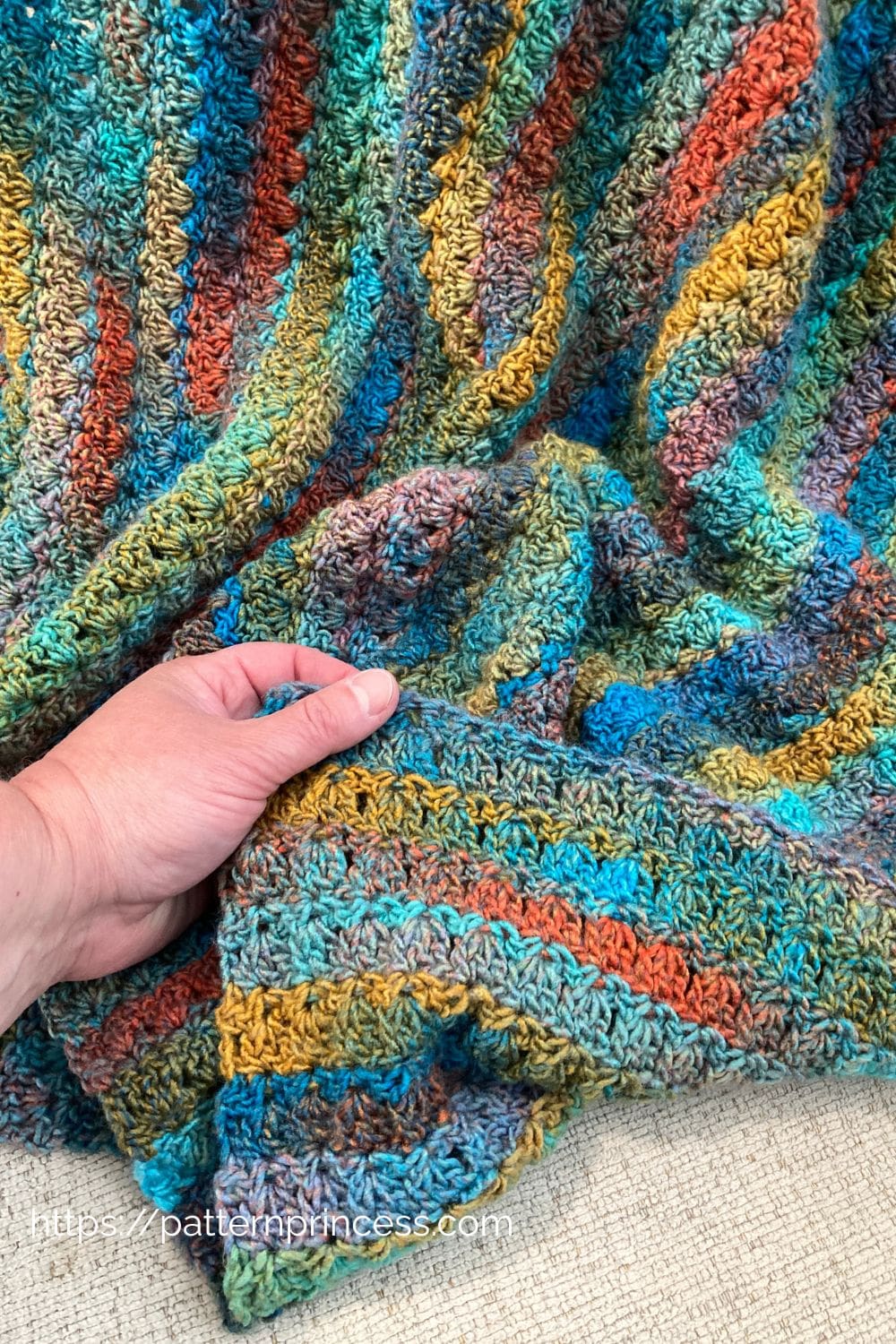
Don’t worry—your project may not look exactly like the designer’s sample, and that doesn’t necessarily mean you’ve made a mistake. Yarn, hook size, tension, stitch placement, and even your experience level can all affect how your crochet looks.
There are several reasons your stitches may look different.
Your tension may be different. You may be holding the yarn more tightly or loosely than the person who made the sample. This can change the size and appearance of your stitches.
Your hook size may be different. Even changing to a slightly larger or smaller hook can change the look and feel of your fabric.
Your yarn may be different. Yarn weight, fiber, texture, and even the brand of yarn can affect the finished appearance. Two yarns labeled the same weight can still crochet a little differently.
Your stitches may not be the same size yet. When you’re learning, some stitches will naturally be tighter or looser than others. With practice, your tension will usually become more consistent.
You may be working into a different part of the stitch. Crochet stitches have specific places where the hook should be inserted. Accidentally working into the wrong loop or space can change the look of your pattern.
Don’t assume you’ve done something wrong just because your project doesn’t look exactly like the sample. The goal when you’re learning is to become comfortable with the stitches and techniques. Your work will become more consistent as you practice.
What Is Crochet Tension?
Crochet tension refers to how tightly or loosely you hold the yarn and make your stitches. Everyone develops their own natural tension, and it can change as you become more comfortable with crochet.
If you crochet very tightly, your stitches may be smaller and your fabric may feel firm and dense. If you crochet loosely, your stitches may be larger and your fabric may be softer and more open.
Your tension affects more than just how your stitches look. It can also change the finished size of your project. If a pattern is designed to make a 40-inch blanket and your stitches are much tighter than the designer’s, your finished blanket may be smaller.
This is why some crochet patterns include a gauge. Gauge gives you a way to compare your stitches with the designer’s before making the entire project.
Don’t worry if your tension isn’t perfect when you’re first learning. Consistency comes with practice. As you crochet more, you’ll naturally become more comfortable holding your yarn, controlling your hook, and creating stitches that are similar in size.
Tip: If your stitches feel extremely tight, try relaxing your grip on the yarn and hook. You don’t need to pull each stitch tight against the hook. The hook should be able to move through the loops without a lot of force.
If you’re struggling with your tension or your finished project isn’t the size you expected, my Crochet Tension Explained article goes into more detail.
Don’t Be Afraid to Undo Your Work
You will make mistakes when you’re learning to crochet. Everyone does. Sometimes the easiest solution is to pull out a few stitches or even several rows and try again. Crocheters often call this “frogging,” because you rip it, rip it, rip it. It may feel frustrating at first, but learning to recognize and fix mistakes is an important part of becoming comfortable with crochet.
Frequently Asked Questions About Crochet
What is crochet in simple terms?
Crochet is a craft that uses a hooked tool called a crochet hook to work yarn or thread into connected stitches, creating fabric and handmade items such as blankets, scarves, hats, and home decor.
Is crochet easier than knitting?
Some beginners find crochet easier to learn because it typically uses one hook rather than two knitting needles. However, the best craft for you depends on your preferences, the techniques you enjoy, and the projects you want to make.
Can you teach yourself to crochet?
Yes! Many people learn to crochet using written patterns, books, photographs, and video tutorials. Starting with basic stitches and a simple project can help you develop your skills at your own pace.
How long does it take to learn crochet?
The time it takes depends on how often you practice and which skills you want to learn. You may become comfortable with a few basic stitches relatively quickly, while more complex techniques and projects take additional practice.
What is the easiest thing to crochet for a beginner?
A simple dishcloth, washcloth, or small rectangular project is often a good starting point. These projects let you practice basic stitches without needing to learn complicated shaping.
Do you need expensive supplies to crochet?
No. You can begin with a basic crochet hook, an affordable skein of yarn, scissors, and a yarn needle. As you gain experience, you can explore different yarn fibers, hook materials, and additional tools.
What is the best yarn for beginner crochet?
Smooth, medium-weight yarn in a light or solid color is often a good choice. It makes stitches easier to see and is generally easier to work with than very fuzzy, dark, or highly textured yarn.
If you’re not sure what yarn is easiest to work with as a beginner, see my guide to Best Yarn for Beginners.
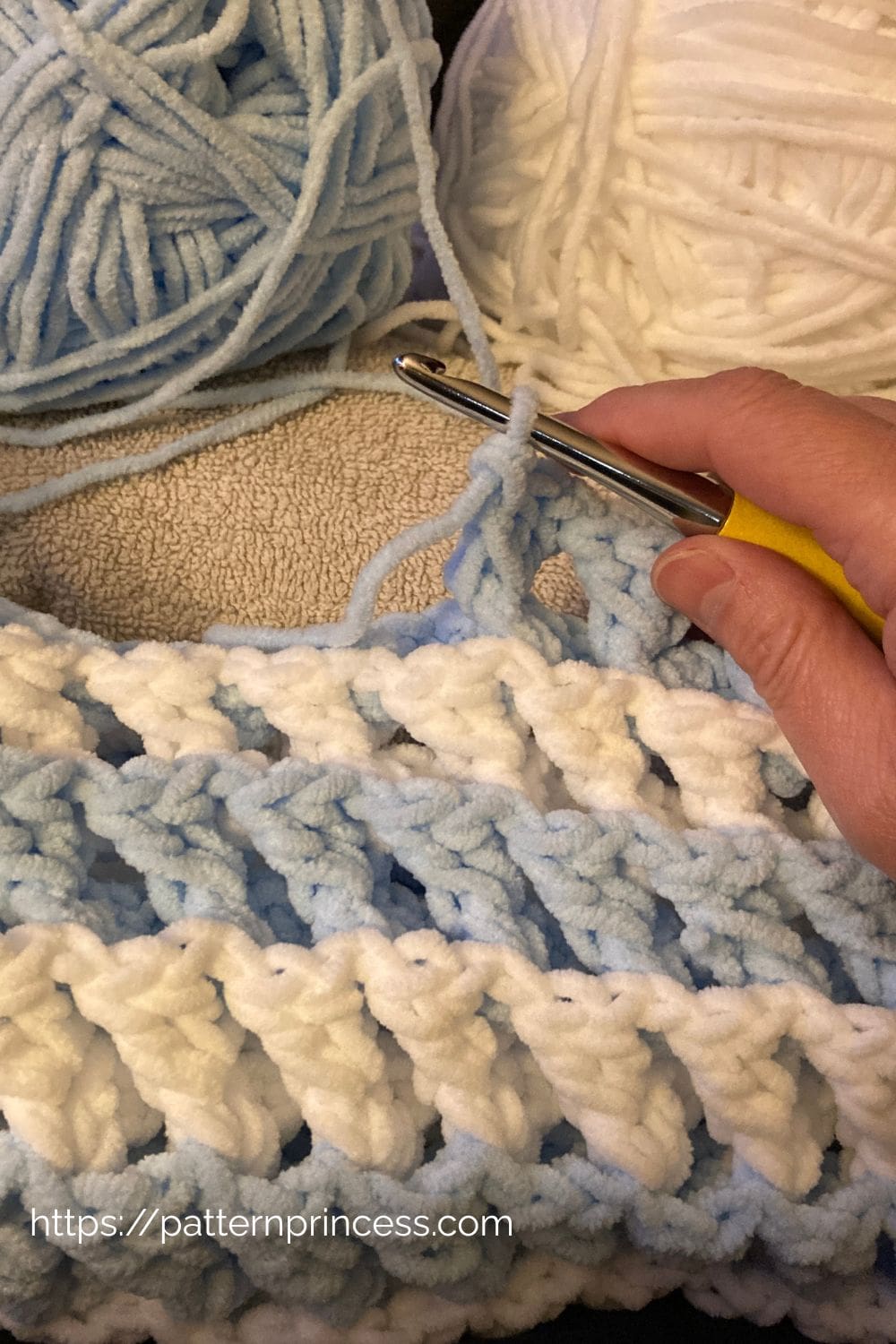
Can you crochet with any type of yarn?
Many types of yarn can be crocheted, but different fibers, weights, and textures behave differently. Choose yarn that suits your project and follow the pattern’s recommendations when available.
Is crochet only for blankets and scarves?
Not at all! Crochet can be used to make clothing, bags, baskets, toys, home decor, jewelry, flowers, lace, and many other items. The variety of stitches and yarns makes it a remarkably versatile craft.
Can left-handed people crochet?
Yes! Left-handed people can crochet by holding the hook in their left hand and working the stitches in a mirrored direction. Left-handed video tutorials can be particularly helpful when learning new techniques.
Start Your Crochet Journey
Crochet is a creative, rewarding craft that allows you to transform yarn into something useful, beautiful, and uniquely yours. With a few basic supplies and some practice, you can learn the foundational stitches and begin making projects you’ll be proud of.
Start small, take your time, and remember that every crocheter began as a beginner.
Ready to get started? Explore our crochet tutorials and free crochet patterns at Pattern Princess to find your next project and learn new skills one stitch at a time.
Want to learn more? Visit my Crochet Tips for more beginner-friendly tutorials covering everything from choosing yarn and reading yarn labels to stitch multiples, gauge, and finishing your projects.

You can find Victoria crocheting, quilting, and creating recipes. She has cooked in restaurants for over 20 years, including many larger parties. She learned to crochet when she was just 11 years old and has been crocheting ever since; over 50 years now. Over 40 years ago, she loved her first class in sewing and continues to hone her skills in quilting. Many have enjoyed the handmade gifts over the years. In her professional career, she has worked in management in a wide variety of businesses including higher education as a dean of a division. All the while attending college part-time to achieve her doctorate in higher education with an emphasis in e-learning.
Stay connected with Pattern Princess
Add Pattern Princess as a preferred source in Google Search to make it easier to find our crochet patterns, recipes, quilt patterns, and other creative projects when you're looking for something new to make.
