
If you’ve ever found yourself wondering “how long should a scarf be?” while crocheting, knitting, or sewing, you’re not alone. Even as a designer, I sometimes pause and think, do I want this scarf to be a snug wrap, a cozy bundle, or a dramatic extra-long statement piece?
The truth is, scarf sizes aren’t one-size-fits-all. Everyone has personal preferences.
They can be short and sweet, long and flowy, or somewhere in between. It is such a versatile accessory, and they add a finishing pop of color. Finding just the right size may be just your personal style preference.
In this guide, I’ll walk you through standard scarf lengths, extra-long variations, and everything in between.
Complete with a handy size chart to make your next crocheting, knitting, or sewing project stress-free.
Table of contents
Why Scarf Length Matters
The different lengths of a scarf can completely change how it feels and looks. Here are some key things to think about when deciding on the perfect length.
- Comfort and Warmth. A longer scarf offers more wraps around the neck, perfect for cold winters. Shorter scarves work well as light accessories.
- Style. Want a casual drape, a dramatic wrap, or a professional look? Length makes all the difference.
- Recipient. Scarves for kids, men, and women often differ in both width and length, which is why having a guide helps.
Change the Feel and Function
The size of a scarf does more than just change how it looks. It changes how it feels and functions, too. A scarf that’s too short might not wrap comfortably, while one that’s too long could feel bulky if it doesn’t suit the wearer.
- Height. A good rule of thumb is that the scarf should complement the wearer’s height. Shorter individuals may prefer a short scarf for balance, while taller people often look great with longer styles.
- Scarf Style. Where and how will the scarf be worn? A large, extra-long scarf makes a dramatic fashion statement, while a medium-length scarf is timeless and versatile.
- Pattern. The stitch or design of the scarf can play a big role. Dense, textured stitches may work better in narrower widths, while airy lace patterns often look best with more length.
- Yarn or Fabric Choice. Chunky yarns and thicker fabrics create bulk, so scarves made from them may not need to be as wide or long. Lightweight yarns, on the other hand, often drape beautifully in longer styles.
- Purpose. Is the scarf meant for warmth, fashion, or both? A purely decorative scarf can be shorter, while a winter-ready wrap usually needs more length.
All of these factors come together to help you decide what size scarf will work best for your project.
Standard Scarf Sizes
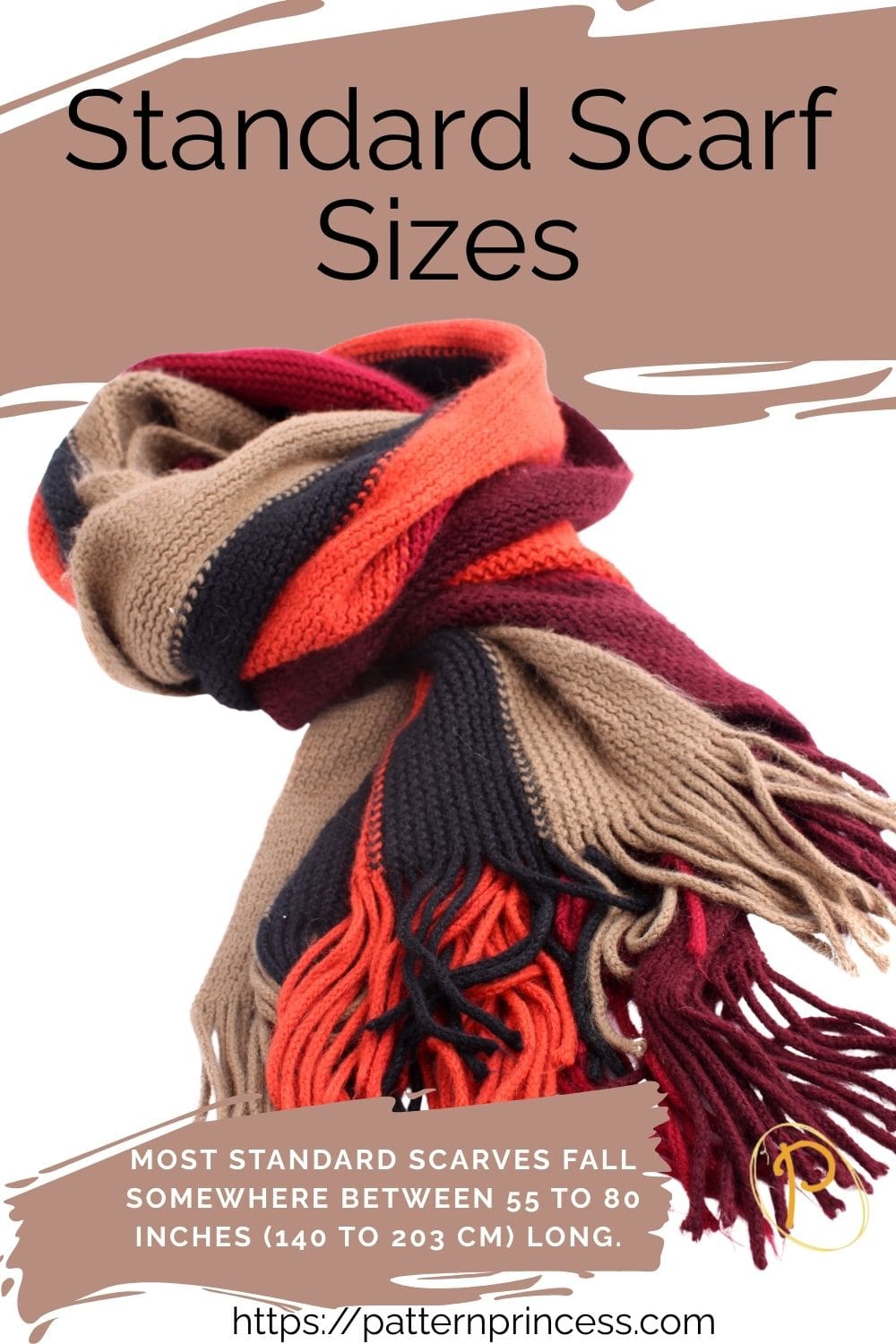
So, what’s the average length of a scarf? While there’s no single “correct” measurement, most standard scarves fall somewhere between 55 to 80 inches (140 to 203 cm) long.
This range gives you flexibility depending on how you’d like to style it.
- Children’s Scarves (36–48 inches / 91–122 cm). Shorter and narrower so they’re easy to wear and won’t overwhelm small frames. These are long enough to keep little ones warm without being too bulky or unsafe.
- Shorter Adult Scarves (55–65 inches / 140–165 cm). Great for a more casual everyday look. These can be tied once or simply draped around the neck without much extra fabric hanging down.
- Longer Adult Scarves (70–80 inches / 178–203 cm). Perfect if you want more styling options. With this length, you can loop your scarf once or twice, create a simple knot, or let it drape dramatically for added flair.
This “standard” sizing range works well for most men’s, women’s, and children’s scarves. Making it a good starting point if you’re unsure what the average lengths are to aim for in your project.
Extra-Long Scarves (100 Inches and Beyond!)
Sometimes, bigger really is better. Scarves measuring around 100 inches (254 cm) or more are perfect if you love variety.
With an extra-long scarf, you can:
- Wrap it several times for extra coziness.
- Wear it loosely draped for drama.
- Style it like a shawl for an elegant look.
These oversized scarves are fun statement pieces and can turn even a simple outfit into something stylish.
How Wide Should a Scarf Be?
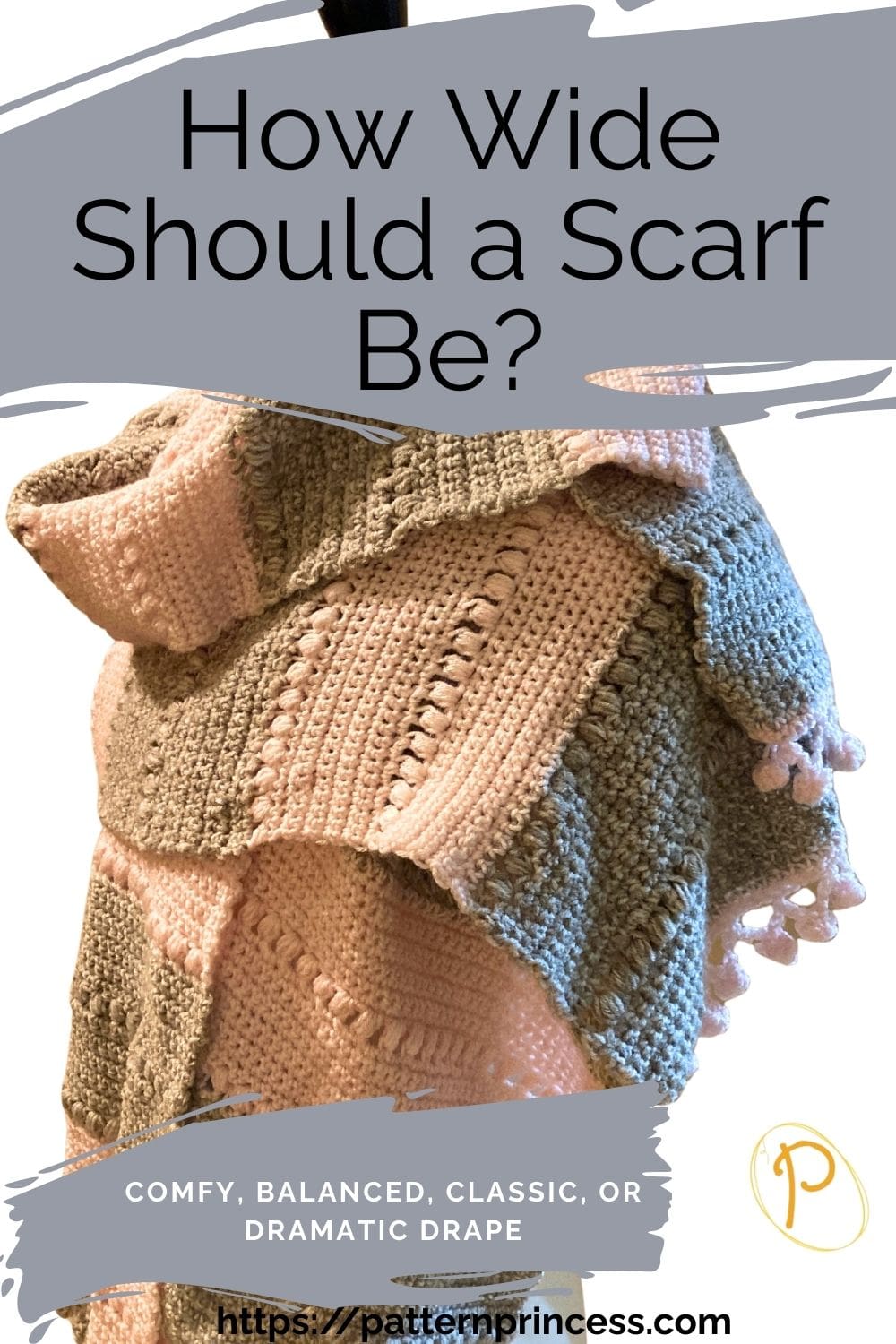
Width determines drape, warmth, and how bulky (or sleek) the scarf feels. Use these ranges as a friendly starting point. Then tweak for your stitch pattern, yarn/fabric, and the wearer.
Quick Width Guide
- Kids. 4–6 in (10–15 cm). Comfy, not overpowering.
- Teens/Petite Adults. 6–7 in (15–18 cm). Balanced, everyday wear.
- Standard Adult (women). 6–8 in (15–20 cm). Classic look, easy to style.
- Standard Adult (men). 7–10 in (18–25 cm). A bit broader for a traditional men’s silhouette.
- Wide Scarves. 8–12 in (20–30 cm). Cozy, dramatic drape; great for cold climates.
- “Super” Wide / Wraps. 12–18+ in (30–46+ cm). Doubles as a shawl or stole.
Style-Based Widths
- Skinny Scarf. 3–4 in (8–10 cm) Light accessory, great for styling knots and long lengths.
- Standard Everyday Scarf. 6–8 in (15–20 cm). The go-to for most patterns and outfits.
- Blanket Scarf/Wrap. 12–18 in (30–46 cm). Very warm, looks luxe, perfect for extra-long styles.
Infinity & Cowl Notes
Infinity scarves and cowls are a continuous loop. They are sized by circumference, but the “height” (what feels like width when worn) matters.
- Single-loop infinity/cowl height. 8–12 in (20–30 cm)
- Double-loop infinity height. 10–14 in (25–36 cm)
- Circumference (reference). 50–60 in (127–152 cm) single-loop; 60–70 in (152–178 cm) double-loop
Fabric/Yarn & Stitch Considerations
- Yarn Weight. Bulky and super-bulky yarns feel wider on the body. Consider trimming width by 0.5–1.5 in (1–4 cm) vs. the chart.
- Dense Stitches (e.g., post stitches, seed/moss, tight rib). Can look and feel heavier; go slightly narrower or add more length for balance.
- Lace/Openwork. Benefits from extra width so the pattern shows. Block for full effect.
- Sewn Fabrics (fleece, flannel, rayon challis):
- Fleece. 6–8 in (15–20 cm) keeps bulk manageable.
- Wovens with nice drape. 7–10 in (18–25 cm) look elegant without stiffness.
Proportion Tips (Width ↔ Length)
- Wider scarves generally want more length to wrap comfortably.
- 6–8 in (15–20 cm) wide → pairs well with 60–70 in (152–178 cm) length.
- 8–12 in (20–30 cm) wide → consider 70–90 in (178–229 cm).
- 12–18 in (30–46 cm) wide → shines at 90–100+ in (229–254+ cm) (wrap/shawl territory).
Finishing Details
- Fringe/Tassels add visual width at the edges and real length (often 4–6 in / 10–15 cm per side). Account for that when cutting enough fabric or crocheting.
- Blocking can add up to 5–10% to width in many stitch patterns. Measure after a test block if precision matters.
- Ribbing & Stretchy Stitches can “grow” in wear; aim slightly narrower if you want a snug look long-term.
Scarf Length and Width by Style
Not all scarves are created equal! The style you choose—classic, cowl, infinity, or wrap—affects how long and wide your project should be. Here’s a quick guide:
Classic Scarf
- Width. 6–8 in (15–20 cm) standard; up to 10 in (25 cm) for men
- Length. 60–70 in (152–178 cm) for standard; 70–80 in (178–203 cm) for longer styling
Neck Warmer
- Width/Height. 6–8 in (15–20 cm)
- Length/Circumference. 20–24 in (51–61 cm), just enough to slip over the head and sit comfortably on the neck
- Great for quick projects and cold-weather layering
Cowl
- Height (like scarf width). 8–12 in (20–30 cm)
- Circumference. 25–30 in (64–76 cm) for a single-loop fit; 50–60 in (127–152 cm) for a double loop
- Works beautifully in both bulky and lightweight yarns
Infinity Scarf
- Width. 8–12 in (20–30 cm)
- Circumference. 50–60 in (127–152 cm) for a single loop, 60–70 in (152–178 cm) for a double loop
- Meant to be looped once or twice around the neck
Wrap / Pocket Shawl
- Width. 12–18 in (30–46 cm)
- Length. 60–72 in (152–183 cm), wide enough to cover shoulders and still hang nicely in front
- A versatile choice that doubles as both scarf and shawl
Are Pocket Shawls “Scarves”?
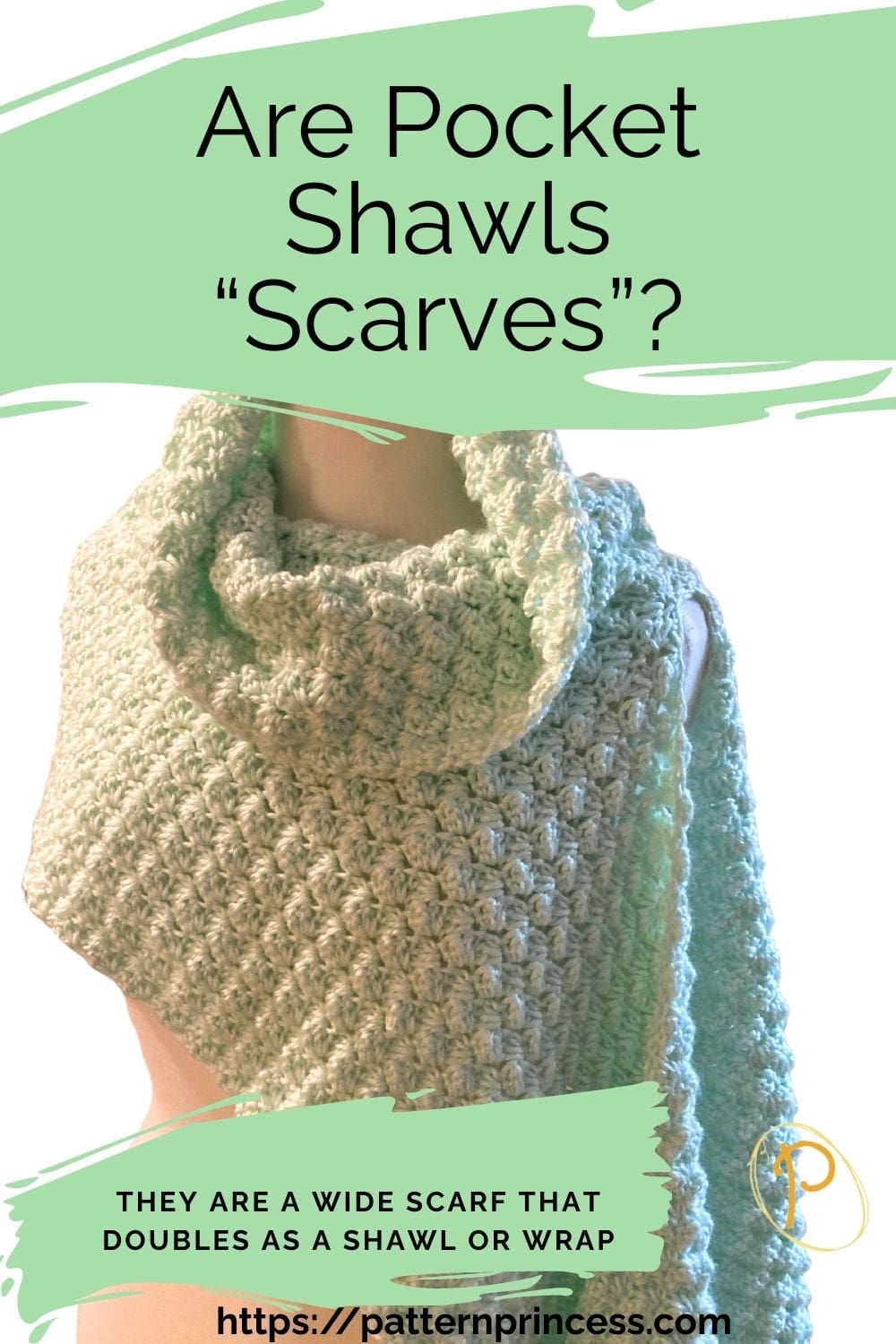
They’re best thought of as a wide scarf that doubles as a shawl (sometimes called a wrap). You wear them like an oversized scarf.
Draped around the shoulders with the ends hanging down. But the extra width gives you cozy shoulder coverage and space to add pockets. So yes, they fit under the scarf umbrella, but their width and styling are closer to a shawl.
Pocket Shawl Sizing Guide (Drop-In Section)
Typical Dimensions
- Width. 12–18 in (30–46 cm)
- 12–14 in for a sleeker look; 16–18 in for true shawl coziness.
- Length. 58–72 in (147–183 cm)
- Long enough to cross the back and still give you usable pocket placement in front.
Quick Size Chart
| Fit | Width | Length | Notes |
| Petite | 12–14 in (30–36 cm) | 58–64 in (147–163 cm) | Keeps bulk down; great with lighter yarns |
| Standard | 14–16 in (36–41 cm) | 64–70 in (163–178 cm) | Most versatile for layering |
| Tall/Plus | 16–18 in (41–46 cm) | 68–72 in (173–183 cm) | Extra shoulder coverage & pocket drop |
| Teen | 11–13 in (28–33 cm) | 54–60 in (137–152 cm) | Narrower, lighter; watch pocket depth |
Rule of thumb. Wingspan test. Hold arms out and measure fingertip to fingertip. Aim for a pocket shawl length that’s 5–10 in (13–25 cm) shorter than wingspan so the pockets land in a comfy spot.
Pocket Size & Placement
Pocket Size
- Width. 6–9 in (15–23 cm)
- Height. 7–10 in (18–25 cm)
- Proportion tip. pocket width ≈ 60–75% of shawl width; pocket height ≈ 80–100% of pocket width (so it fits a phone + hand comfortably).
Placement of Pocket
- Distance from bottom edge. start the pocket 2–4 in (5–10 cm) up from the lower edge (leave space for a border or fringe).
- From side edge. center the pocket or set it 1–1.5 in (2.5–4 cm) in from the edge for a tidy border reveal.
- Where it lands when worn. pockets should sit roughly at low rib to high hip (about 20–24 in / 51–61 cm below the shoulder, depending on wearer height).
Yarn, Fabric, and Stitch Notes
- Bulky yarns / dense stitches (post stitches, thermal, waffle) add heft. Consider trimming width by 1–2 in (2.5–5 cm) and adding a little extra length so it wraps nicely.
- Drape-y stitches or fabrics (lace crochet, knit stockinette, rayon challis, flannel) can go wider without feeling boxy.
- Sewn pocket shawls (fleece/flannel). Aim for 14–16 in wide to avoid stiff bulk; top-stitch pockets for strength.
Finishing & Function
- Borders (rib, moss, linen stitch) can add 0.5–1.5 in (1–4 cm) to width. Measure after blocking.
- Fringe or tassels visually lengthen the piece; add 4–6 in (10–15 cm) nice length per side.
- Reinforce pocket corners with extra stitches or bar-tacks; if crocheting/knitting, work a round of slip stitch around the pocket before sewing it on for durability.
When to Choose a Pocket Shawl vs. Scarf
- Pick a pocket shawl if you want shoulder coverage, handy storage, and a wrap-like look.
- Choose a standard or extra-long scarf if you prefer neck wraps, lighter layers, or more styling knots/loops.
How to Measure the Right Scarf Length
Here’s a tip many makers use: match the scarf length to the wearer’s height or wingspan. This gives a natural proportion without needing to measure every inch.
Other things to keep in mind:
- Yarn and Stitch. Chunky yarn or textured stitches can make a scarf feel shorter once wrapped.
- Fringe or Tassels. They add length. Sometimes 4–6 inches on each side.
- Fabric Stretch. Knitted, crocheted, or sewn fabrics may drape differently, so give a little wiggle room.
Handy Scarf Size Charts
1) By Recipient (quick starting points)
| Recipient / Type | Width (in / cm) | Length (in / cm) | Notes |
| Child | 5–6 in / 13–15 cm | 36–48 in / 91–122 cm | Light, easy to wear; avoid bulky widths. |
| Teen / Petite | 6–7 in / 15–18 cm | 55–60 in / 140–152 cm | Balanced everyday size. |
| Standard Women | 6–8 in / 15–20 cm | 60–70 in / 152–178 cm | Classic fit; most patterns land here. |
| Standard Men | 7–10 in / 18–25 cm | 65–75 in / 165–190 cm | Broader silhouette; pairs well with coats. |
| Long | 7–10 in / 18–25 cm | 80–90 in / 203–229 cm | More styling options and double loops. |
| Extra-Long | 8–12 in / 20–30 cm | 100+ in / 254+ cm | Statement length; wraps like a shawl. |
| Pocket Shawl | 12–18 in / 30–46 cm | 58–72 in / 147–183 cm | Shawl-like width; add pockets (6–9 in / 15–23 cm). |
Tip. Wider scarves usually feel best with more length. Lace/openwork likes a bit more width; dense stitches feel wider on the body.
2) By Style (classic, cowl, infinity, wrap)
| Style | Width/Height (in / cm) | Length / Circumference | Notes |
| Classic Scarf | 6–8 in / 15–20 cm (up to 10 in / 25 cm for men) | 60–70 in / 152–178 cm (standard); 70–80 in / 178–203 cm (long) | The everyday go-to. |
| Neck Warmer | 6–8 in / 15–20 cm (height) | 20–24 in / 51–61 cm (circumference) | Snug, slips over head; great quick make. |
| Cowl (single loop) | 8–12 in / 20–30 cm (height) | 25–30 in / 64–76 cm (circumference) | Cozy without bulk; shines in texture. |
| Cowl (double loop) | 10–14 in / 25–36 cm (height) | 50–60 in / 127–152 cm (circumference) | Wraps twice; very warm. |
| Infinity Scarf (single) | 8–12 in / 20–30 cm | 50–60 in / 127–152 cm (circumference) | Designed to loop once. |
| Infinity Scarf (double) | 8–12 in / 20–30 cm | 60–70 in / 152–178 cm (circumference) | Loops twice; drapey yarns/fabrics shine. |
| Wrap / Stole | 12–18 in / 30–46 cm | 60–72 in / 152–183 cm (length) | Shoulder coverage; dress-up friendly. |
| Pocket Shawl | 12–18 in / 30–46 cm | 58–72 in / 147–183 cm (length) | Place pockets 2–4 in / 5–10 cm above bottom edge. |
3) Silk Scarves (squares & oblongs)
| Silk Type | Size (in / cm) | Notes / Use Cases |
| Square (Small) | 17–21 in / 45–55 cm | Neck ties, hair, handbag accessory. |
| Square (Medium) | 27–35 in / 70–90 cm | Fold into triangle; versatile styling. |
| Square (Large) | 35–44 in / 90–110 cm | Draped shawl, wrap top, statement piece. |
| Oblong / Rectangular | Width: 10–20 in / 25–50 cm • Length: 50–80 in / 127–203 cm | Light layering without bulk; elegant drape. |
Handy finishing notes
As you can see, there are a variety of ways to make a scarf, here are just a few more things to consider.
- Fringe/tassels add length (often 4–6 in / 10–15 cm per side). Decide if you’re measuring before or after fringe.
- Blocking can increase width/length by ~5–10% (more for lace).
- Bulky yarns & dense stitches feel wider. Consider trimming width by 0.5–1.5 in / 1–4 cm; lace/openwork often benefits from adding width.
Tips for Makers
No matter what your craft is; crochet, knitting, or sewing, here are a few things to consider.
- Adjust for Yarn Weight or Fabric Thickness. Bulky yarn or fleece will feel shorter once wrapped.
- Play with Width and Length Together. A very wide scarf may not need to be super long.
- Don’t Forget Finishing Touches. Tassels, fringe, or decorative edges add both beauty and length.
- Try It on as You Go. One of the best perks of making your own scarf is the ability to test the fit before finishing.
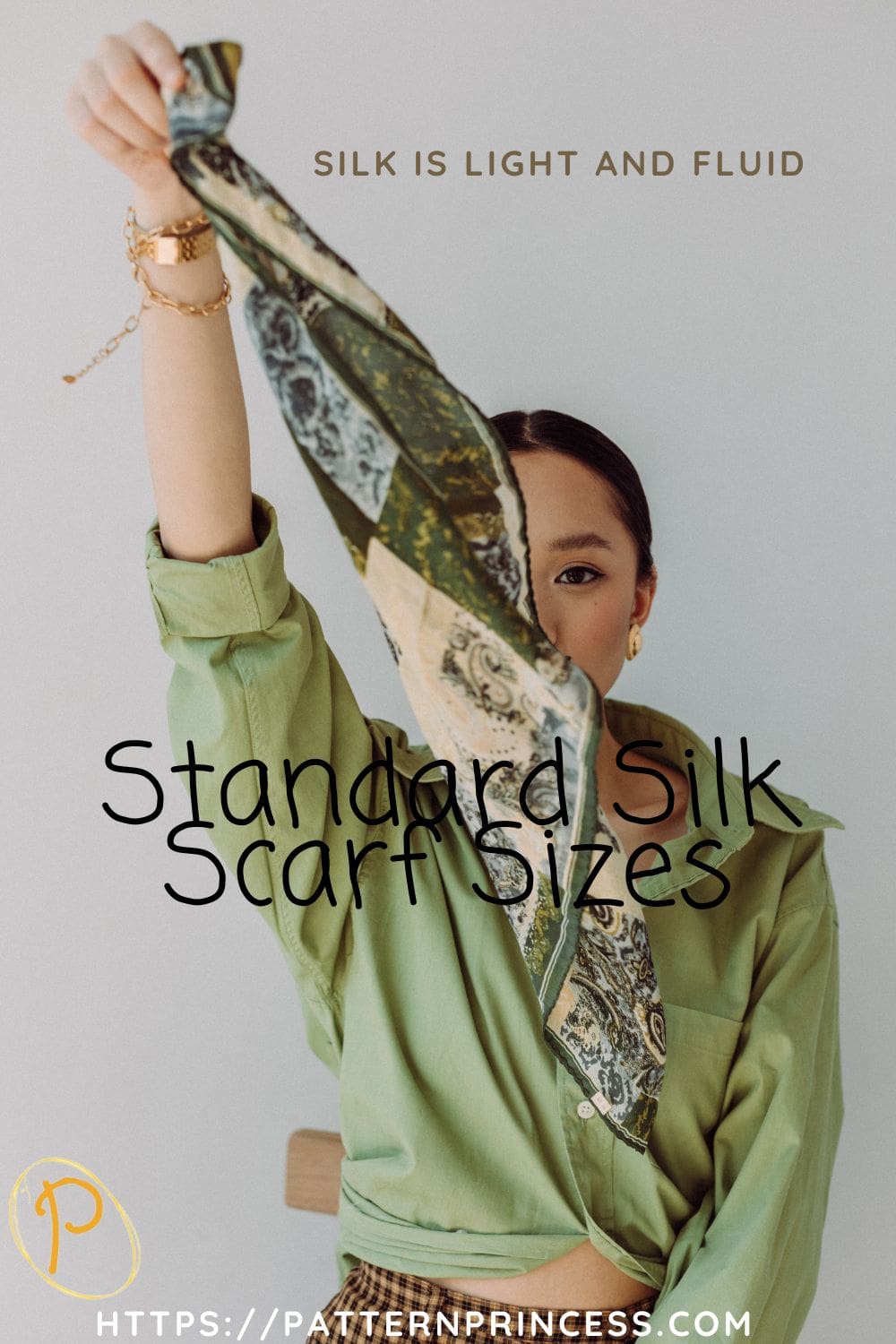
Silk Scarves: A Unique Size Category
Silk scarves really do their own thing. Instead of being designed mainly for warmth, they’re typically worn as fashion accessories. They’re all about drape, versatility, and styling.
They can be worn in different styles around the neck, in the hair, tied to a handbag, or even styled as a top. Because of this, silk scarves come in distinct size ranges.
Because of that, sizes tend to be squares or light oblongs rather than the heavier winter scarf dimensions.
Silk scarves stand apart from traditional scarves.
Standard Silk Scarf Sizes
- Small (Neck/Hair Scarves)
- Small Square: 17–21 in (45–55 cm)
- Perfect for tying around the neck in a simple knot, worn as a headband, or tied on a handbag.
- Medium (Classic Accessory Scarves)
- Medium Square: 27–35 in (70–90 cm)
- Very versatile: can be folded into a triangle and tied, wrapped around a ponytail, or worn ascot-style.
- Large (Shawl or Statement Scarves)
- Large Square: 35–44 in (90–110 cm)
- Often styled as a draped shawl, wrap top, or luxurious shoulder cover.
- Rectangular Silk Scarves (Oblong Styles)
- Width: 10–20 in (25–50 cm)
- Length: 50–80 in (127–203 cm)
- Similar in length to fabric scarves but much lighter. Perfect for layering without bulk.
Why Silk Scarves Are Different
- Fabric Drape. Silk is lightweight and fluid, so even larger sizes don’t feel bulky.
- Styling Variety. They’re often tied, twisted, or draped in ways that winter scarves aren’t.
- Year-Round Wear. Unlike crochet or knit scarves that are seasonal, silk scarves work in both warm and cool weather.
Why they’re different. Silk is light and fluid, so larger sizes still feel effortless. It’s also a year-round accessory. Perfect for spring and summer outfits as well as cool-weather layering.
Styling Your Scarf
Once you’ve chosen the perfect size, have fun wearing it in different ways.
- Simple Drape. Just toss it over your shoulders for a relaxed look.
- One Loop. Wrap once around your neck for warmth without bulk.
- Double Loop. Perfect for cold weather with long or extra-long scarves.
- As a Shawl. Drape an oversized scarf around your shoulders for elegance.
So, How Long Should a Scarf Be?
Now that I have this reference, the next time a make a crochet scarf or sew a cowl, I’ll make sure to reference this handy chart.
There really isn’t one perfect length for a scarf. It all depends on who it’s for and how it will be worn.
Standard scarves are practical and versatile, while extra-long scarves make bold, cozy fashion statements.
The best part? As a maker, you get to decide. Use the size chart as a guide, but don’t be afraid to experiment. The right length is the one that feels just right to you (or your lucky scarf recipient).
You can find Victoria crocheting, quilting, and creating recipes. She has cooked in restaurants for over 20 years, including many larger parties. She learned to crochet when she was just 11 years old and has been crocheting ever since; over 50 years now. Over 40 years ago, she loved her first class in sewing and continues to hone her skills in quilting. Many have enjoyed the handmade gifts over the years. In her professional career, she has worked in management in a wide variety of businesses including higher education as a dean of a division. All the while attending college part-time to achieve her doctorate in higher education with an emphasis in e-learning.
An excellent article. Thank you so much!