
Last updated on June 5th, 2026 at 02:37 pm
The Trinity Stitch is a beautiful textured crochet stitch that creates a dense, woven fabric with a soft, almost quilted look. If you love stitches that feel both simple and visually interesting, this one is a great addition to your crochet toolbox.
This stitch is worked using basic crochet techniques, including chain stitches and single crochet stitches worked together to form small clusters. Once you get into the rhythm of the repeat, it becomes a relaxing and satisfying stitch to work on—perfect for blankets, scarves, dishcloths, and more.
In this step-by-step tutorial, you’ll learn exactly how to crochet the Trinity Stitch, including written instructions, helpful tips, and guidance for keeping your edges neat and your stitch pattern consistent.
Whether you’re looking for a new textured crochet stitch or planning your next cozy handmade project, the Trinity Stitch is a versatile and timeless choice.
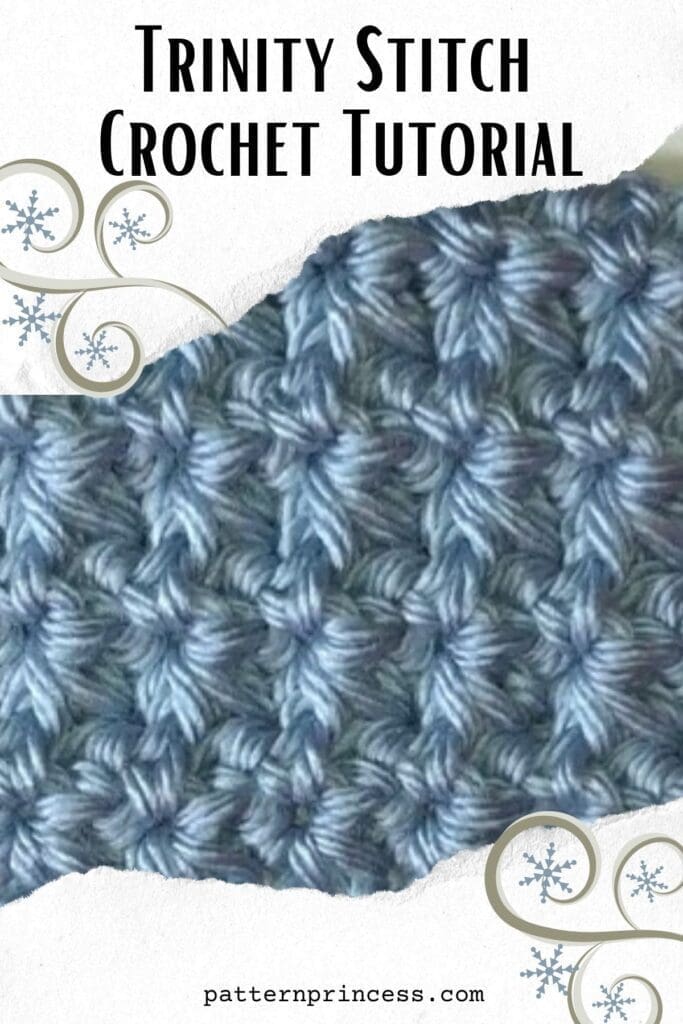
What does The Trinity Crochet Stitch Look Like?
The look is a nice texture with a bit of puff and three vertical bars extending into the stitches in the row below. While this stitch is puffy like the berry stitch and the bobble stitch, it is a little bit more of a subtle puff. Yet it looks like little stars or flowers.
This crochet stitch is made up of clusters of single crochet stitches that start in the same stitch the previous stitch ended. Once you get going, this is an easy stitch to work.
What Can You Make With the Trinity Stitch?
The Trinity Stitch creates a beautifully dense, textured fabric that is both sturdy and soft. Because of its tight structure and minimal gaps, it works especially well for projects where you want warmth, durability, and a polished handmade look.
One of the most popular uses for the Trinity Stitch is blankets. It creates a cozy, slightly weighted feel that is perfect for baby blankets, lap throws, and full-size afghans. The texture adds visual interest without needing complicated color changes or stitch work.
It also works wonderfully for smaller everyday items. Dishcloths and washcloths made with this stitch are long-lasting and hold up well to repeated use and washing. Scarves and cowls benefit from the stitch’s warmth and thickness, making them ideal for colder seasons.
Other great project ideas include:
- Baby blankets and crib blankets
- Lap throws and full-size afghans
- Dishcloths and washcloths
- Scarves and cowls
- Pillow covers and cushion fronts
- Market bags and sturdy totes
- Home décor accents like table runners or placemats
Because the stitch is so textured, it looks beautiful in both solid colors and subtle variegated yarns. It’s a great choice when you want a simple stitch pattern that still feels visually interesting and handmade.
Video Tutorial and Photo Tutorial
You will find the links to my YouTube Channel for the video tutorials for both left and right hand crocheters below the written directions. Additionally, within the written directions, there are photos showing the stitches and where to put your hook to help you successfully complete this beautiful stitch.
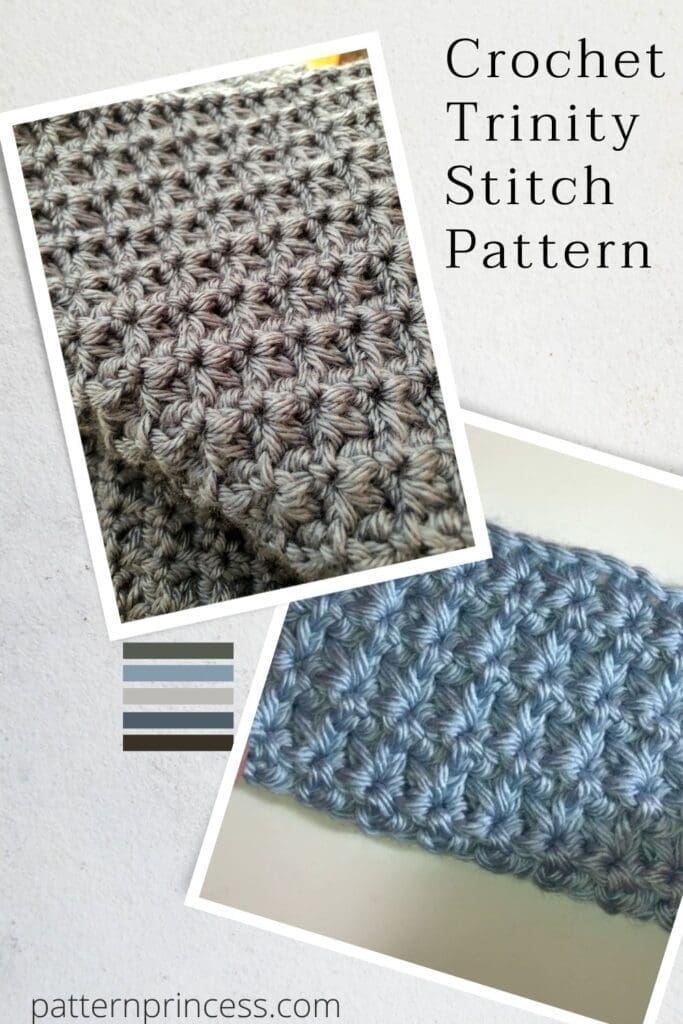
Best Yarn for this Stitch
For this Trinity Stitch sample, I used a medium weight (worsted / #4) yarn in a solid color. A smooth, solid yarn is especially helpful for this stitch because it allows the textured clusters to stand out clearly, making it easier to see the stitch definition as you work.
You can use almost any fiber for this stitch, including acrylic, cotton, or wool blends depending on your project. Acrylic yarn is a great choice for blankets and everyday items because it is soft, durable, and easy to care for. Cotton works beautifully for dishcloths and washcloths, while wool blends add extra warmth for colder-weather projects.
Because the Trinity Stitch is quite textured, solid or lightly variegated yarns tend to show the stitch pattern best. Highly busy or heavily speckled yarns may hide some of the beautiful detail in the stitch clusters.
For best results, choose a smooth yarn with good stitch definition so you can clearly see each cluster as you build the pattern.
Crochet Stitch Pattern Directions: Trinity Stitch Crochet Tutorial
Skill Level
Advanced Beginner or Intermediate level crocheter
The Trinity Stitch uses basic crochet skills including chain stitches, single crochet, and single crochet three together (sc3tog). Once you understand the repeat, it becomes very relaxing and repetitive.
Gauge
Gauge will depend on the yarn and crochet hook that you choose to use.
Materials
Medium weight (worsted / #4) yarn.
Crochet Hook according to package directions. To keep the crochet stitches a bit looser I use a larger hook than recommended.
Today I used a Caron Simply Soft yarn and a Size J crochet hook.
Tapestry Needle
Scissors
Tape Measure
Crochet Tutorial Notes
Written in US Terms.
This stitch is worked in even stitches, multiples of 2
This pattern is a repeat of row 2 until you reach your desired size.
Try and keep your stitches a bit looser. This will help you be able to get your hook into the stitches in the previous row.
Turn at the end of each row.
If you are going to change the yarn to a different color, I would add the new yarn at the end of the row just before working the chain stitch for next row.
Abbreviations
- CH = Chain
- SC = Single Crochet
- SP = Space
- ST = Stitch
- STs = Stitches
- YO = Yarn Over
- [ ] = Repeat
Crochet Stitches
Chain Stitches (CH)
Begin the chain stitch by making a slip knot on the crochet hook. Leave about a 5-inch tail on the yarn. This will be woven in later.
Next snug up the yarn loop that is on the crochet hook; while it should be firm, it should also be loose enough to slide on the hook with ease.
Keeping the loop on the hook, wrap the yarn over the crochet hook from back to front. Draw the yarn through the loop. You’ve just made a chain stitch. Yarn over again and draw the yarn through the loop on the hook. Continue yarning over and drawing the yarn through the loop on the hook to make more chain stitches.
HOW TO CROCHET THE CHAIN STITCH video tutorial
Single Crochet (SC)
Insert the hook in a stitch and pull up a loop. Yarn over and pull through the two loops on the hook.
HOW TO CROCHET THE SINGLE CROCHET STITCH video tutorial
Begin Crochet Pattern
Row 1
Chain any length in a multiple of 2.
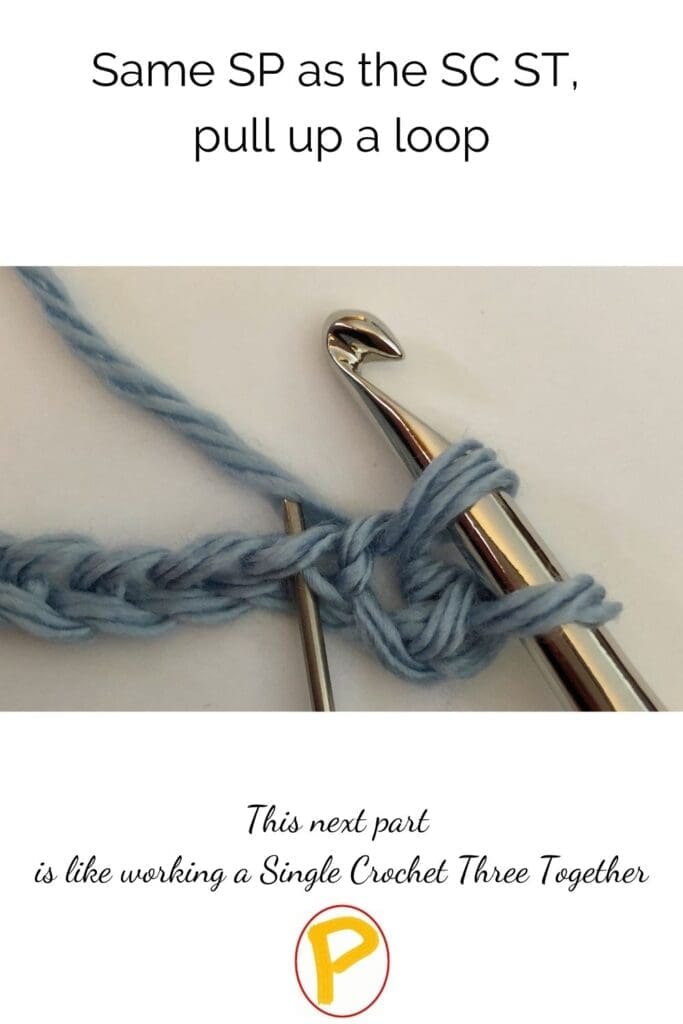
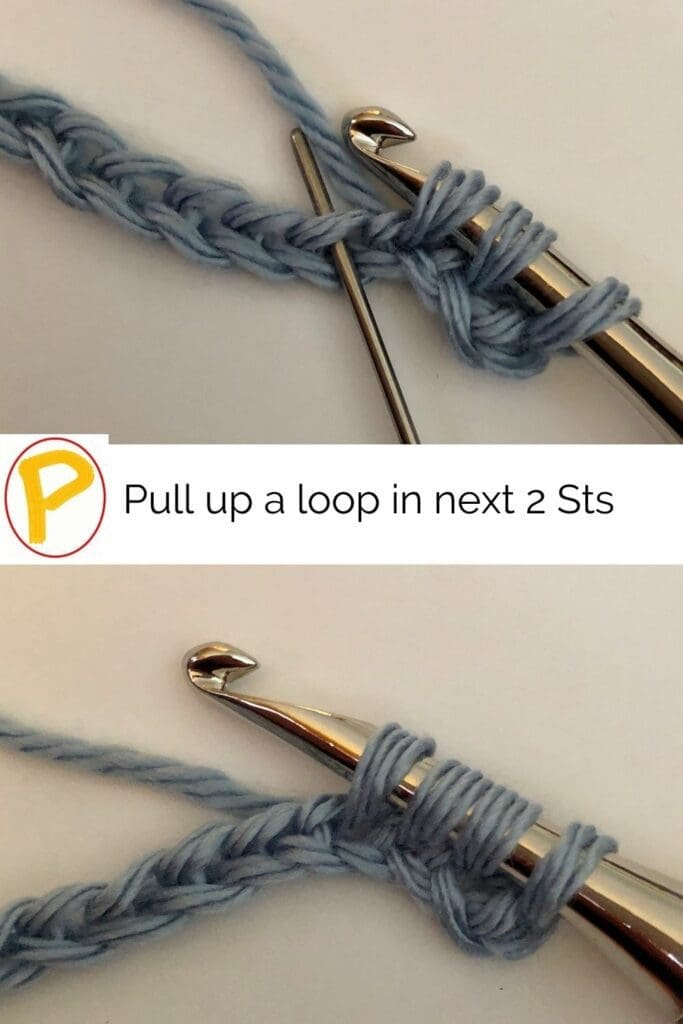
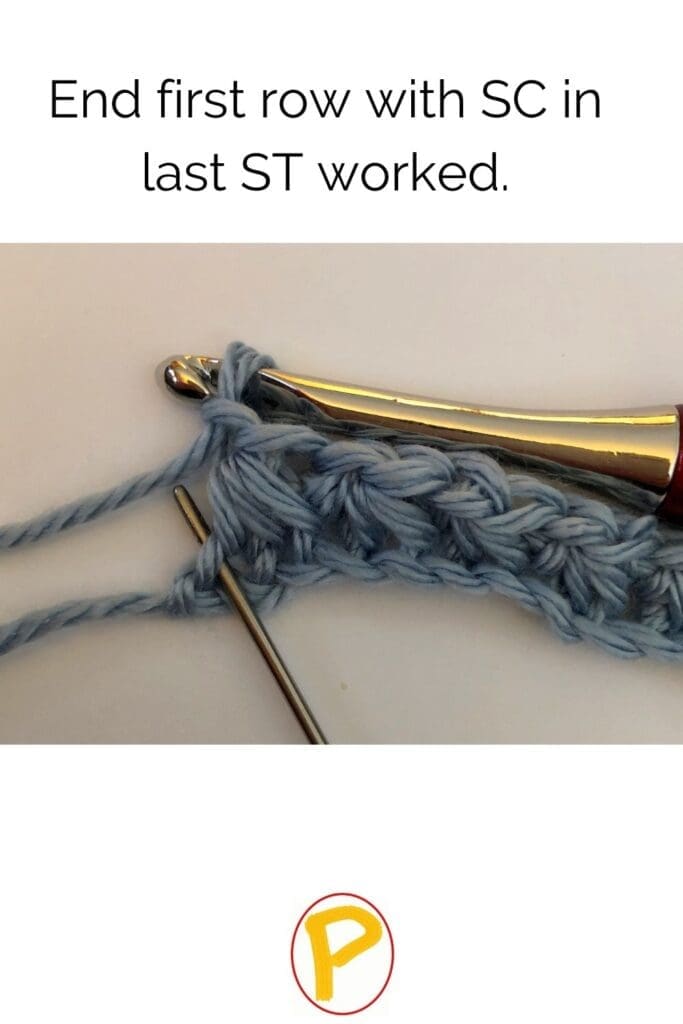
SC in the 2nd CH from the hook. Insert hook into the same SP as the SC ST and pull up a loop. Pull up a loop in the next 2 STs. There should be 4 loops on your hook at this point. YO and pull through all 4 loops on your hook. CH 1 to close this stitch. [Insert the hook into the same SP and pull up a loop, pull up a loop in the next 2 STs, YO and pull through all 4 loops on the hook, CH 1 to close]. Repeat between [ ] across. End of the row. In the last ST, do not close with the Ch 1, rather work a SC in the last ST. Turn

Row 2
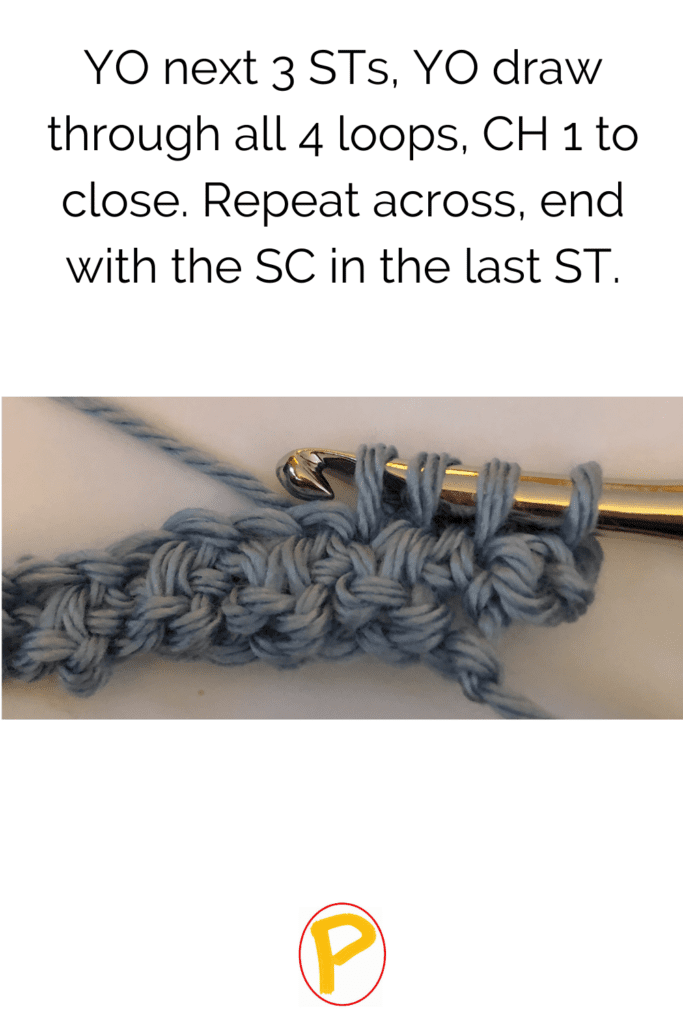
CH 1, SC in the same ST as you worked the CH 1 (The first ST). Insert the hook into the same SP as the SC ST and pull up a loop. Pull up a loop in the next 2 STs. There should be 4 loops on your hook at this point. YO and pull through all 4 loops on your hook. CH 1 to close this stitch. [Insert the hook into the same SP and pull up a loop, pull up a loop in the next 2 STs, YO and pull through all 4 loops on the hook, CH 1 to close]. Repeat between [ ] across. In the last ST, do not close with the Ch 1, rather work a SC in the last ST. Turn
Repeat row 2 until piece is desired size.

Step-By-Step Photos of the Trinity Stitch
Row 1 Photos


Row 2 Photos

Video Tutorial of the Trinity Stitch
Right Hand Crochet Trinity Stitch Tutorial
Left Hand Crochet Trinity Stitch Tutorial
Trinity Stitch vs Star Stitch
At first glance, the Trinity Stitch and Star Stitch can look similar because both create a textured, clustered design. However, they are actually quite different in structure, appearance, and technique.
The Trinity Stitch is worked in tight clusters that are created by working multiple partial single crochet stitches together into the same stitch. This gives it a dense, woven look with very little space between stitches. The finished fabric is thick, warm, and ideal for practical projects like blankets and dishcloths.
The Star Stitch, on the other hand, creates a more open, decorative texture. It is worked in a star-like formation where loops are pulled up and closed together to form a “burst” or star shape. This stitch has more visual definition and tends to be slightly lacier and more airy compared to the Trinity Stitch.
In general, the Trinity Stitch produces a flatter, more uniform fabric, while the Star Stitch creates a more dimensional, decorative effect.
If you enjoy textured crochet stitches, both are worth learning and experimenting with depending on your project needs. You can explore the full step-by-step tutorial for the Star Stitch here.
Quick comparison:
- Trinity Stitch: dense, warm, practical, tightly textured
- Star Stitch: decorative, more open, visually bold, slightly airy
Both stitches are beautiful in their own way and can add variety to your crochet projects depending on the look and function you want.
Is Trinity Stitch good for blankets?
Yes. Trinity Stitch creates a warm, textured fabric with minimal gaps, making it an excellent choice for baby blankets and throws.
Does Trinity Stitch use more yarn?
Slightly more than basic single crochet because of the clustered construction.
My stitch pattern isn’t lining up
Be sure you’re placing the first loop of each cluster into the same stitch where the previous cluster ended.
My edges are uneven
Count stitches at the end of every row and pay special attention to the beginning and ending single crochet stitches.

You can find Victoria crocheting, quilting, and creating recipes. She has cooked in restaurants for over 20 years, including many larger parties. She learned to crochet when she was just 11 years old and has been crocheting ever since; over 50 years now. Over 40 years ago, she loved her first class in sewing and continues to hone her skills in quilting. Many have enjoyed the handmade gifts over the years. In her professional career, she has worked in management in a wide variety of businesses including higher education as a dean of a division. All the while attending college part-time to achieve her doctorate in higher education with an emphasis in e-learning.
Stay connected with Pattern Princess
Add Pattern Princess as a preferred source in Google Search to make it easier to find our crochet patterns, recipes, quilt patterns, and other creative projects when you're looking for something new to make.
