
Did you know you can make crisp sweet summer refrigerator pickles in just 24 hours? You know that moment when you bite into a pickle and it snaps? We’re talking about sweet, tangy, aggressively crunchy refrigerator pickles that you can make without a single piece of canning equipment.
The secret is time, not technique. Twenty-four hours in your fridge turns ordinary cucumbers into something you’ll crave on sandwiches, straight from the jar at midnight, or alongside literally anything that needs a bright, briny crunch.
Here’s how to make pickles that actually taste like you know what you’re doing.

Why Refrigerator Pickles Beat the Canned Stuff Every Time
Canned pickles have their place, but refrigerator pickles are where the magic happens without the pressure cooker anxiety.
No boiling water baths. No worrying about botulism. No jars exploding on your countertop at 2 a.m. Refrigerator pickles live in your fridge from day one, which means the process is shockingly simple and the cucumbers stay shatteringly crisp because they’re never heat-processed into submission.
The other massive win? Flavor control. You decide how sweet, how garlicky, how dill-forward these get. You’re not stuck with whatever the factory decided tastes like “bread and butter” or “dill.” You can tweak the sugar, add heat, throw in extra onions, or go full herbaceous with a bouquet of fresh dill that actually tastes like something.
And because they’re ready in 24 hours instead of weeks, you can taste them, adjust, and make another batch before the weekend’s over. That’s the kind of feedback loop that turns a decent pickle into your signature move.

Crisp Sweet Summer Refrigerator Pickles in 24 Hours
As an Amazon Associate I earn from qualifying purchases.
Kitchen Essentials


Ingredients
- 8 English Cucumbers
- 3 Quarts Water
- 1 Pint White Vinegar
- 1/2 Cup Canning and Pickling Salt
- 1 Cup Granulated Sugar
- 1 Vidalia Onion sliced
- 1 Handful Fresh dill
text ingredients
Instructions
How to Make Sweet Summer Pickles That Actually Stay Crunchy
- Wash your jars. Use hot, soapy water and rinse them until there’s zero soap residue. Let them air dry or towel them off. You don’t need to sterilize anything because these aren’t shelf-stable, they’re fridge pickles. Clean is good enough.
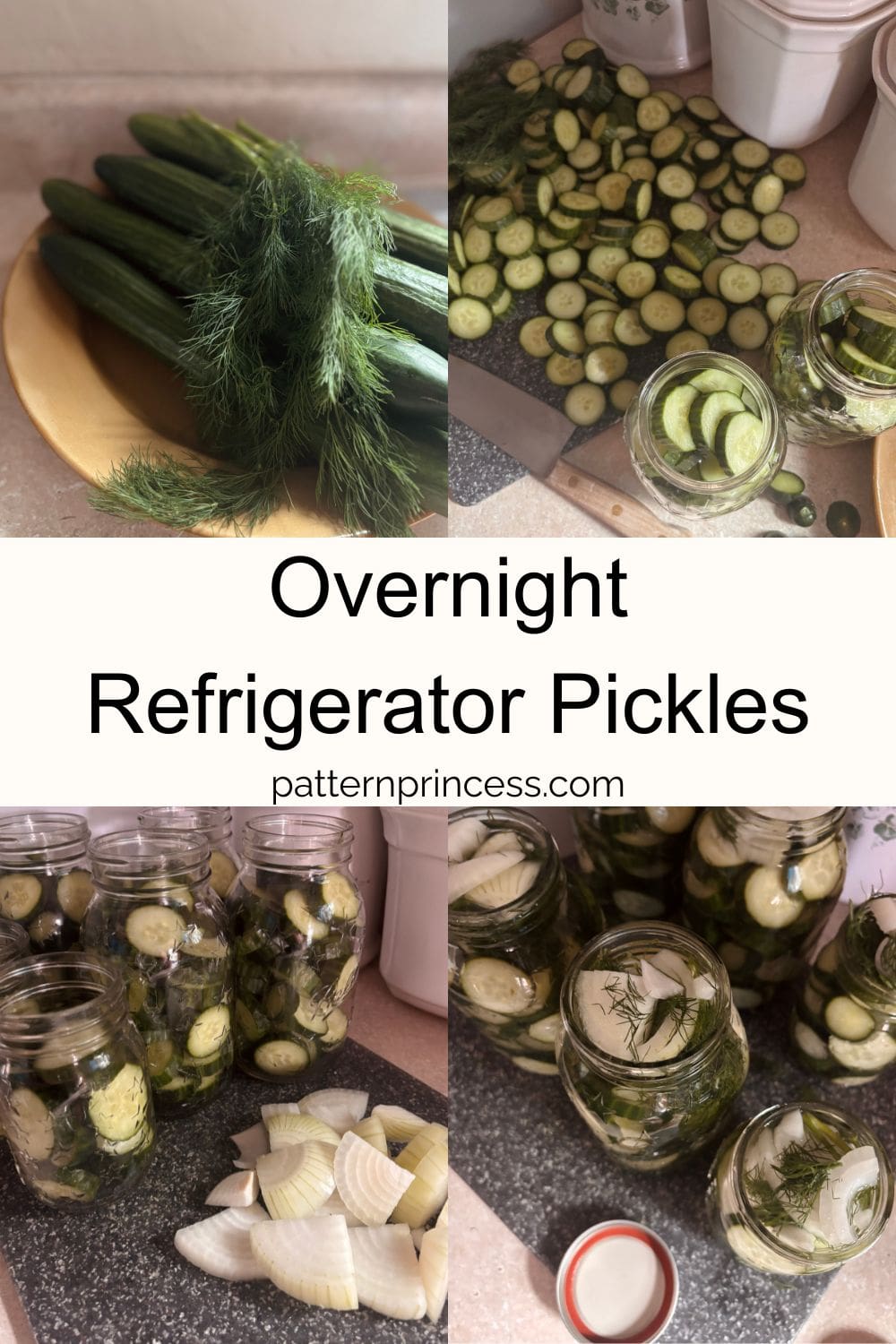
- Slice the cucumbers. Chips are perfect for sandwiches and snacking. Spears give you that classic deli pickle crunch. Go about a quarter-inch thick for chips so they stay sturdy in the brine. If you’re doing spears, slice the cucumbers lengthwise into quarters or sixths depending on how thick they are.8 English Cucumbers
- Prep your aromatics. Slice one Vidalia onion into thin rounds. Grab a handful of fresh dill and give it a rough chop or leave the sprigs whole if you want that visual moment when you open the jar later.1 Vidalia Onion, 1 Handful Fresh dill
- Pack the jars. Layer cucumbers, onion slices, and dill into your clean jars, leaving about half an inch of space at the top. Pack them snug but not so tight that the brine can’t flow around everything. This is where the flavor actually gets in.
- Make the brine. In a medium saucepan, combine three quarts of water, one pint of white vinegar, half a cup of pickling salt, and one cup of granulated sugar. Crank the heat to medium-high and stir until the sugar and salt completely dissolve. You’ll know it’s ready when the liquid goes from cloudy to clear and you can’t see any crystals at the bottom.3 Quarts Water, 1 Pint White Vinegar, 1/2 Cup Canning and Pickling Salt, 1 Cup Granulated Sugar
- Pour it hot. Carefully ladle or pour the hot brine over the cucumbers until everything is submerged. Leave that half-inch of headspace. The heat from the brine jump-starts the pickling process and helps the cucumbers absorb the flavors faster.
- Release the air bubbles. Tap the jars gently on the counter or slide a butter knife down the inside edge to let trapped air escape. This prevents weird pockets where the brine doesn’t reach and keeps everything evenly flavored.
- Seal and cool. Wipe the rims clean so the lids seal properly, then screw them on. Let the jars cool at room temperature for one to two hours until they’re no longer hot to the touch. Don’t skip this. Putting hot jars straight into a cold fridge can crack the glass.
- Refrigerate for 24 hours. This is the hardest part because you have to wait. The cucumbers need a full day to soak up all that sweet, tangy, oniony goodness. After 24 hours, crack one open and taste. The flavor will keep developing over the next few days and hit peak deliciousness around day three.
- Serve cold and keep cold. These are refrigerator pickles, not shelf pickles. They live in your fridge and they’ll stay crisp and flavorful for up to four weeks as long as they stay submerged in the brine.
Your Own Private Notes
Notes
Tips from the Kitchen
The difference between good pickles and legendary pickles lives in the details most people skip.- Use pickling salt, not table salt. Table salt has iodine and anti-caking agents that make your brine cloudy and can leave a metallic aftertaste. Pickling salt is pure, dissolves clean, and keeps your brine crystal clear. If you can’t find it, kosher salt works, but you’ll need to adjust the amount because it’s less dense.
- Slice consistently. If your cucumber chips are all different thicknesses, some will be perfectly pickled while others are either under-brined or mushy. A mandoline slicer is clutch here, but a sharp knife and a little patience work just fine.
- Don’t skip the Vidalia onion. It adds a subtle sweetness that balances the vinegar tang and makes the whole jar taste more complex. Yellow onions are sharper and can overpower the cucumbers. Red onions look pretty but taste too aggressive for a sweet pickle.
- Taste your brine before you pour. Once it’s dissolved and hot, dip a spoon in and taste it. It should be noticeably sweet and tangy, almost too much on its own. The cucumbers will mellow it out as they soak, so bold is good.
- Keep the jars in the back of the fridge. The door gets opened constantly and the temperature fluctuates. The back of the fridge stays consistently cold, which keeps your pickles crisp longer.
Nutrition
A few of my favorite things
The Power of Positivity
Why English Cucumbers?
Not all cucumbers pickle the same, and this is where most people quietly mess up.
English cucumbers are the move here. They’re long, skinny, and have thin skins with barely any seeds. That means more crunch per bite and less watery mush after a day in brine. You’ll need about seven or eight to fill four quarts, and they slice beautifully into chips or spears without turning into a soggy disaster.
Regular slicing cucumbers can work in a pinch, but they’re wetter and softer. If that’s all you’ve got, scoop out the seeds with a spoon before you slice them. Kirby cucumbers are the classic pickling choice if you can find them at a farmers market, but they’re smaller, so you’ll need more.
Whatever you pick, make sure they’re firm. Give them a squeeze. If they feel spongy or bendy, they’re already past their prime and no amount of brine will save them.
Ingredient Variations and Swaps
Once you’ve nailed the base recipe, this is where you get to play.
Spicy sweet pickles: Add sliced jalapeños or a few pinches of red pepper flakes to the jars before you pour the brine. The heat cuts through the sweetness and makes these dangerously snackable.
Garlic dill refrigerator pickles: Swap half the sugar for an extra splash of vinegar, then add four or five smashed garlic cloves and double the dill. You’ll end up with something closer to a classic dill pickle but still with that subtle sweetness.
Bread and butter style: Add a teaspoon of mustard seeds and a half teaspoon of turmeric to the brine. Slice the cucumbers thin and add an extra onion. This is the move if you’re making pickles for burgers or pulled pork sandwiches.
Pickle spears with kick: Throw in whole peppercorns, coriander seeds, and a few dried chili peppers for a more complex, layered flavor. This works especially well if you’re using Kirby cucumbers.
You can also swap the cucumbers entirely. Green beans, carrots, radishes, and even cauliflower all pickle beautifully with this same brine. Just keep the sizes consistent so everything pickles evenly.
How to Store These So They Stay Perfect
Refrigerator pickles are low-maintenance, but they do have rules.
Always keep them submerged. If the brine level drops and cucumbers are poking out, they’ll soften and develop off flavors. Top off with a quick mix of half water, half vinegar, and a pinch of salt.
They’ll last up to four weeks in the fridge. The flavor peaks around day three and stays solid for about a month. After that, they’re still safe to eat but the texture starts to go soft and the brine can taste a little tired.
Don’t try to freeze them. Cucumbers are mostly water, and freezing turns them into mush. If you want pickles to last longer, make smaller batches more often or scale up your fridge space.
When you’re down to the last few pickles, don’t toss the brine. Use it as a salad dressing base, add a shot to a Bloody Mary, or use it to quick-pickle red onions or jalapeños. That liquid is packed with flavor and it seems like a waste to dump it.

These pickles are proof that the best things don’t need to be complicated. Just cucumbers, a solid brine, and a little patience.
Twenty-four hours from now, you’ll have a fridge full of the kind of pickles that make store-bought jars look like a joke. And once you’ve made them once, you’ll never go back.

You can find Victoria crocheting, quilting, and creating recipes. She has cooked in restaurants for over 20 years, including many larger parties. She learned to crochet when she was just 11 years old and has been crocheting ever since; over 50 years now. Over 40 years ago, she loved her first class in sewing and continues to hone her skills in quilting. Many have enjoyed the handmade gifts over the years. In her professional career, she has worked in management in a wide variety of businesses including higher education as a dean of a division. All the while attending college part-time to achieve her doctorate in higher education with an emphasis in e-learning.
Stay connected with Pattern Princess
Add Pattern Princess as a preferred source in Google Search to make it easier to find our crochet patterns, recipes, quilt patterns, and other creative projects when you're looking for something new to make.

My family loved this!